
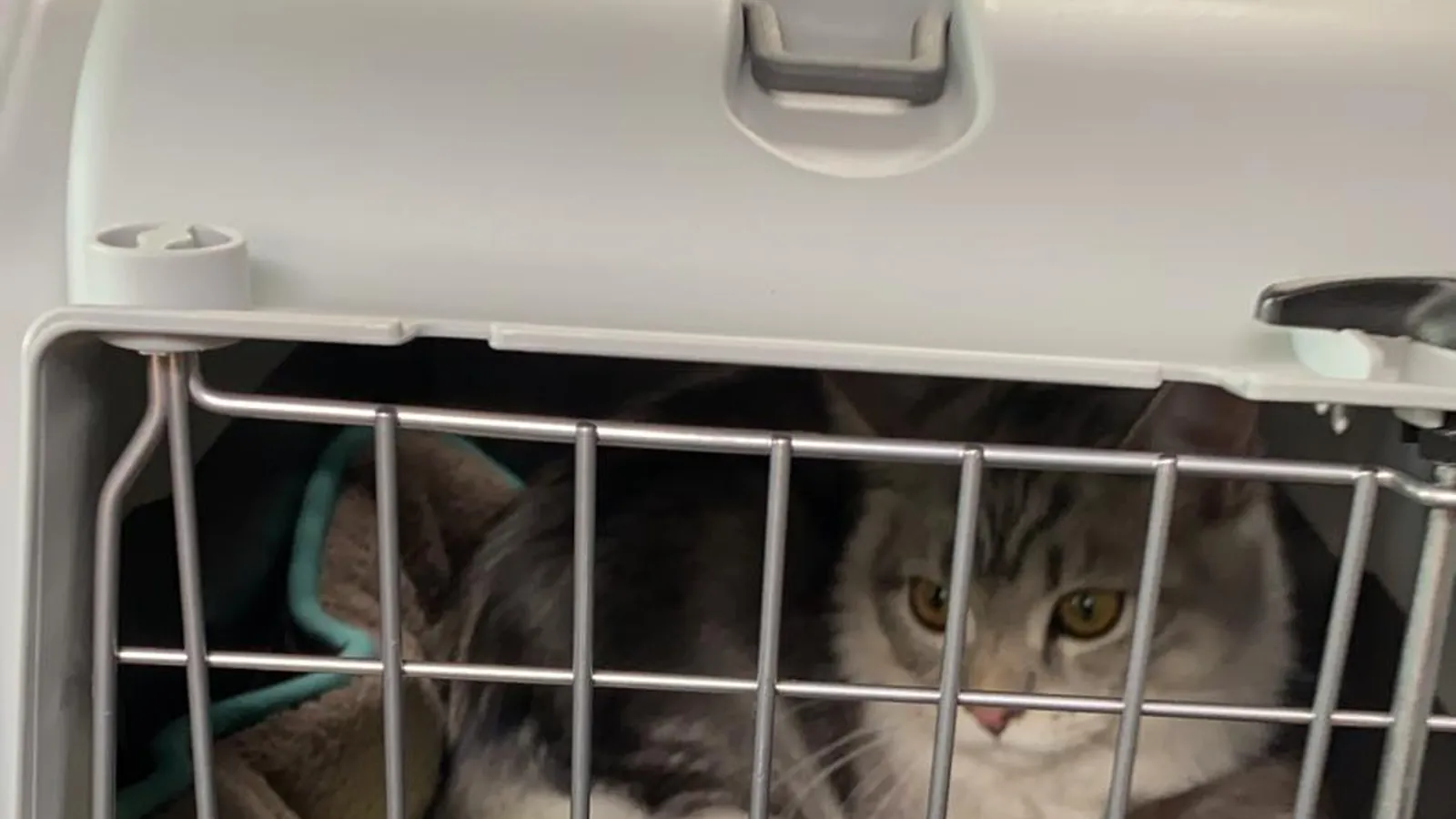
Bringing a cat into Singapore is a sequence of dated gates rather than a single application. Miss one and the whole timeline shifts, sometimes by months. This guide walks the entire path for a cat coming from anywhere, and flags the parts that are specific to cats rather than pets in general.
All AVS requirements below were verified against avs.nparks.gov.sg on 27 September 2026. Rules and fees change — check the official guidance before you commit to dates.
Who can do this, and what has changed
You apply as the owner, or through an AVS-recognised pet agent. One part is no longer a choice: since 1 April 2026, owners may not enter the Changi Airfreight Centre, so the clearance at CAPQ when your cat lands must go through a recognised agent. Everything before that — vaccinations, blood tests, licences — you can still do yourself.
Two other changes matter for cats specifically, and both are recent:
- Cats have been allowed in HDB flats since 1 September 2024, under the Cat Management Framework.
- Licensing a pet cat became compulsory on 1 September 2026. The two-year transition ended on 31 August 2026, and keeping an unlicensed cat is now an offence.
More on both below, because they affect where your cat can live and what you must do within days of arrival.
Step 1: Find your country's AVS schedule
Everything else follows from this. AVS sorts exporting countries into three schedules by rabies risk.
| Schedule | Countries | Rabies blood test | Quarantine |
|---|---|---|---|
| I | Australia, New Zealand, Republic of Ireland, United Kingdom | Not required | None |
| II | Most of Western Europe, USA, Canada, Japan, Hong Kong | Required | None at the AQC |
| III | Everywhere else, including Malaysia, Indonesia, Poland, Russia, Thailand, the Philippines | Required | Minimum 30 days |
The trap is assuming that "Europe" means Schedule II. Poland, Hungary, Croatia, Romania, Bulgaria, Ukraine and Russia are not on the Schedule II list, so a cat from Warsaw faces the full blood test and a month of quarantine, while one from Berlin faces neither. Our schedules explainer covers the lists in detail, and the cost calculator will tell you your schedule in one click.
Step 2: Microchip, then vaccinate — in that order
Your cat needs a microchip meeting ISO 11784 or 11785 Annex A. AVS requires the microchip number to appear on every vaccination and treatment record, so it must be implanted and scanned before those records are created. A non-ISO chip is acceptable only if you bring a reader that can read it.
Core vaccinations for cats cover feline calicivirus, feline herpesvirus-1 and feline panleukopenia, valid according to the manufacturer's schedule.
For Schedule II and III countries, the rabies vaccination comes next, using an inactivated or recombinant vaccine.
Step 3: The rabies blood test and its two waiting periods
This is where cat imports usually gain or lose months.
- Blood is sampled at least 28 days after a valid rabies vaccination.
- The result must show a titre of 0.5 IU/ml or higher, tested at a WOAH reference laboratory or an approved laboratory in a Schedule I or II country.
- Export must happen at least 90 days after the sampling date, and within 12 months of it.
Note that the 90-day clock runs from the blood draw, not from the result, and that the result expires after a year. A move delayed past that 12-month mark means repeating the test and waiting another 90 days. Our RNATT explainer covers what makes a report acceptable.
Schedule I cats skip this step entirely, which is why a cat from London can move in weeks while one from Berlin takes four months at minimum.
Step 4: Licences, in the right order
- Cat licence first. AVS is explicit that you must obtain a cat licence through PALS before applying for the import licence. Since 1 September 2026, a sterilised cat costs S$35 for a one-time licence valid for life, or S$15 a year; an unsterilised cat costs S$90 a year or S$230 for three years. A 10% rebate applies for GIRO, online or AXS payment. First-time applicants take a free one-time online pet ownership course.
- Import licence second. S$50 for normal service, issued two working days after complete documents, or S$100 express. Valid 90 days from issue, with no extension.
- A Customs In-Payment (GST) permit before arrival, valid 10 working days.
Step 5: The final week
- Parasite treatment and the health certificate both fall between 2 and 7 days before export. Internal and external treatments, each recorded with the active ingredient and date.
- The veterinary health certificate must be in the AVS template and endorsed by the exporting country's government veterinary authority.
- Your cat must be at least 12 weeks old on the day of export.
- Book the CAPQ inspection at least five working days ahead. Turning up without an appointment costs S$133 per hour.
Step 6: Arrival, and whether quarantine applies
Your cat goes from the aircraft to CAPQ, where an officer checks the documents, scans the microchip and confirms it is clinically healthy. What happens next depends on your schedule — and, for Schedule II, on your own travel dates:
- Schedule I: no quarantine. Home the same day.
- Schedule II: no quarantine if your cat arrives within 5 days of your own entry into Singapore and has lived at the same address as you for more than 6 months. Otherwise a minimum 10-day home quarantine applies, with an AVS smart collar tag at S$29 per cat per day, paid upfront.
- Schedule III: a minimum 30-day stay at the Animal Quarantine Centre, plus a rabies vaccination on arrival at S$68. Accommodation is S$26 a day fan-cooled or S$35 air-conditioned, rising to S$36 and S$44 on 1 December 2026, plus S$75 transport.
That Schedule II condition catches most cats bought or adopted overseas, because a newly acquired cat has not lived with you for six months. Our home quarantine guide explains how the 10 days work in practice.
Cat-specific things worth knowing
Where your cat can live. Up to two cats per HDB flat, or three cats and dogs combined in private premises. Owners who kept more than two cats before September 2024 and licensed them during the transition may keep those cats, but that grandfathering does not extend to newly acquired ones. The licence itself is not HDB approval — AVS is clear that it remains your responsibility to ensure your housing permits the cat.
Licence conditions. Microchipping is mandatory; sterilisation is not, though it is strongly encouraged and makes the licence far cheaper. You must take reasonable steps against falls and roaming, which in practice means mesh or grilles on windows — worth arranging before your cat arrives, not after. In public, cats must be in a carrier or on a harness.
Banned crosses. First to fourth generation Bengal and Savannah crosses cannot be imported. Fifth generation and later are allowed with documentary proof of the generation, required both at application and at inspection.
Snub-nosed breeds. Persians, Exotic Shorthairs, British Shorthairs, Burmese, Himalayans and Scottish Folds are refused by some airlines, including Singapore Airlines, on welfare grounds. This shapes the route more than the price — see our notes on snub-nosed cats and what Singapore Airlines accepts.
Large breeds. A Maine Coon needs a crate sized to let it stand, turn and lie down naturally, which can push it into a larger IATA size class and change which aircraft will take it. We cover this in Maine Coon import, and it is the part we know best — our own cattery is where we learned it.
What it costs
A cat import typically runs S$3,500 to S$8,500 before GST, with air cargo the largest line. Schedule III adds roughly S$1,000 to S$1,600 for quarantine. The full cost breakdown itemises every line, and the cost calculator gives dates and a figure for your country. For cats specifically, how much it costs to import a cat goes deeper.
Where your cat is coming from
We have country guides for the origins we handle most: the UK, Germany, the Netherlands, the USA, Australia and Malaysia. For the rest of Europe, our complete European guide covers the common routes.
Frequently asked
How long does it take to import a cat to Singapore? From Schedule I countries, about a month, limited by paperwork and cargo space. From Schedule II or III, four months at the absolute minimum — 28 days from vaccination to blood draw, then 90 days to export — and most families should plan six.
Can I bring my cat into an HDB flat? Yes, since 1 September 2024, up to two cats per flat. The cat must be licensed and microchipped, and you must take steps such as mesh or grilles to prevent falls and roaming.
Do I need to license my cat, and by when? Yes. Licensing became compulsory on 1 September 2026. Apply through PALS after your cat is microchipped — and before you apply for the import licence, since AVS requires the cat licence first.
Does my cat need a rabies blood test? Only from Schedule II and III countries. Cats from Australia, New Zealand, Ireland and the UK do not.
Will my cat be quarantined? Not from Schedule I. From Schedule II, only if it arrives more than 5 days after you or has not lived with you for 6 months, in which case 10 days at home. From Schedule III, a minimum 30 days at the AQC.
Can I clear my cat at the airport myself? No. Since 1 April 2026, import clearance at CAPQ must be handled by an AVS-recognised pet agent.
We are Mainecoon Cattery SG, trading as Pet Agent Singapore: an AVS-recognised pet agent and AVS-licensed pet shop (AS24E00026). Cats are what we do — we breed them, we have imported our own from Europe, and we clear other people's at Changi every week. Send us your country and your timing and we will map the dates before anything is booked.
Thinking about your own import?
We can carry the whole chain.
From a one-off planning call to a fully managed move, see how our packages work — or just tell us where your pet is.