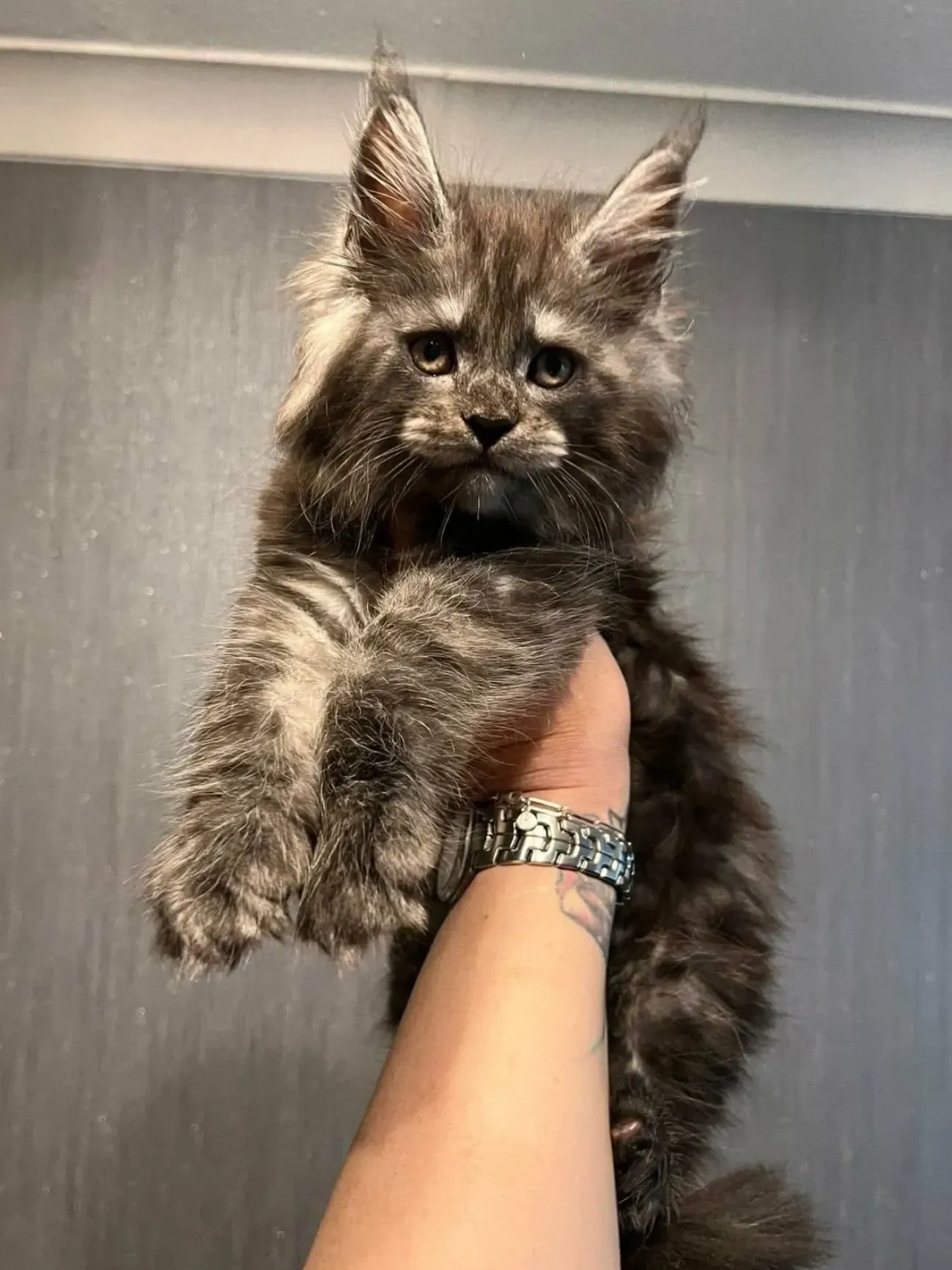
Bringing a cat from Europe to Singapore is less a single event than a sequence. The cat does not simply board a plane; it passes through a chain of veterinary gates that have to be opened in the right order and at the right time. Miss the order, and the whole timeline resets. Understood early, the process is methodical and entirely manageable. This guide walks through it from the first decision to the moment the carrier is opened at home.
Why Europe
Europe remains one of the most reliable origins for pedigree cats, and for breeds such as the Maine Coon it is the heartland. Catteries across France, Estonia, the Netherlands and elsewhere keep strong lines, clear health testing and well-documented pedigrees. The veterinary infrastructure is mature, which matters a great deal when a single mistimed blood test can cost months.
Most prospective owners we speak to are not importing on a whim. They have chosen a specific kitten, often reserved months in advance, and they want it to arrive in good health with paperwork that the Animal & Veterinary Service (AVS) will accept without query. The good news is that Europe sits in a favourable category for Singapore imports. The less convenient news is that the favourable category still carries a waiting period that cannot be rushed.
Which schedule applies
Singapore sorts every country of export into one of five schedules according to rabies risk. The schedule determines what testing is required and whether the cat must spend time in quarantine on arrival.
Most of Europe falls under Schedule II, the controlled-risk category. For a Schedule II import the requirements are clear:
- A rabies vaccination.
- A rabies serology test, also called a Rabies Neutralising Antibody Titre Test (RNATT), showing an antibody level of at least 0.5 IU/ml.
- A waiting period after the blood draw before the cat may be exported.
The significant advantage of Schedule II is that there is no mandatory stay at the government quarantine station on arrival. Home quarantine may be required, but the cat does not sit in a kennel at the airport for weeks. This is materially different from higher-risk origins and is one reason European imports are comparatively straightforward.
A word of caution. Not every European country is treated identically, and schedules are reviewed periodically. France, Estonia and the Netherlands are common Schedule II source countries, but you should always confirm the current schedule for the specific country of export before committing to a timeline. The schedule in force on the day of export is the one that counts.
The timeline, gate by gate
The single most important idea to absorb is that the gates are sequential and time-locked. You cannot draw the serology blood before the rabies vaccination has had time to take effect, and you cannot export until a further wait has elapsed after the blood draw. These intervals are fixed and non-negotiable.
The order is as follows.
- Microchip first. The cat must be fitted with an ISO 11784/11785 compliant microchip, and the chip number must be recorded before the rabies vaccination. If the vaccine is given first and the chip second, the vaccination is not recognised and must be repeated.
- Rabies vaccination. Administered after the microchip is in place and logged.
- Wait at least 28 days. The antibody response needs time to develop. The serology blood draw cannot happen before this 28-day window has passed.
- Rabies serology (RNATT). Blood is drawn and sent to an approved laboratory. A passing result is 0.5 IU/ml or higher.
- Wait 90 days. For Schedule II, the cat may not be exported until 90 days after the date of the successful blood draw.
- Export. Once the 90 days are complete, and with the import licence and health certificate in hand, the cat can travel.
Put together, these waits stack up. Here is how a realistic schedule looks in practice.
| Stage | Approximate timing | Notes |
|---|---|---|
| Microchip implanted | Month 0 | Must precede the vaccination |
| Rabies vaccination | Month 0 | Recorded against the chip number |
| Wait period | Days 1–28+ | Antibody response develops |
| Serology blood draw | Month 1 | Result must reach 0.5 IU/ml |
| 90-day export wait | Months 1–4 | Counted from the blood-draw date |
| AVS import licence applied | Months 3–4 | Submitted ahead of travel |
| Pre-export vet visit and health certificate | Final days | Certificate valid for a short fixed window |
| Flight and arrival | Months 6–7 | Subject to airline scheduling |
The most common disappointment is not a failed test but a misordered one. A vaccine given before the microchip, or a blood draw taken a few days too early, resets the clock by weeks or months. Plan the first three steps with particular care.
In total, a Schedule II import from Europe takes roughly six to seven months from start to arrival. The duration is driven almost entirely by the 28-day and 90-day waits rather than by paperwork. This is why we encourage owners to begin the veterinary sequence as early as the kitten's age allows, well before any flight is booked.
The documents
Paperwork sits alongside the veterinary timeline rather than after it. The two strands run in parallel and meet at the point of export.
The central document is the AVS import licence. It must be applied for in advance, and it is the legal permission to bring the animal in. Without an approved licence in hand, the cat cannot clear on arrival.
The second is the health certificate, issued at a pre-export veterinary visit. This is not a document you can obtain weeks ahead and file away. It certifies the cat's fitness to travel and its compliance with the import conditions, and it is valid only for a fixed short window before departure. The pre-export visit is therefore one of the last things to happen, typically in the final days before the flight, and it must be timed so the certificate is still valid on the day the cat arrives in Singapore.
Alongside these you will keep the supporting records that underpin everything else: the microchip implantation record, the rabies vaccination certificate, and the laboratory report confirming the serology result. Keep originals together and travelling with the cat; AVS and the airline may both want to see them.
Flights and crates
European carriers move animals to Singapore as manifested air cargo rather than in the cabin. The cat travels in the hold in a climate-appropriate section, in a crate that meets the IATA Live Animals Regulations.
The crate is not an accessory. It must be IATA-compliant: rigid, well-ventilated on multiple sides, secured with bolts rather than clips, large enough for the cat to stand, turn and lie down, and fitted with food and water access. An undersized or non-compliant crate can be refused at check-in, so it is worth sizing it correctly the first time. For a large breed such as the Maine Coon, the crate is often bigger than owners expect, and crate size feeds directly into the cargo cost.
Air cargo from Europe to Singapore typically runs between S$2,200 and S$3,800, with the variation driven by crate dimensions and the airline chosen. The crate itself, when purchased as an IATA-approved unit by weight class, costs between S$180 and S$450.
Arrival and CAPQ
On landing, the cat arrives at the Changi Airfreight Centre, where the AVS conducts its inspection and clearance, sometimes referred to as CAPQ clearance. The crate is checked, documents are verified against the import licence, and the cat is released for collection or for home quarantine if required.
There is an important recent change here. From 1 April 2026, owners may no longer enter the Changi Airfreight Centre to clear their own pets. Clearance at CAPQ must be handled by an AVS-recognised pet agent. This is a significant shift for anyone who previously planned to collect the animal personally, and it means engaging a recognised agent is now part of the standard process rather than an optional convenience.
A note on our own position. Petagent.sg is operated by MAINECOON CATTERY SG, an AVS-licensed pet shop (licence AS24E00026). Our application for AVS pet-agent recognition is in progress; we are not yet listed as an AVS-recognised pet agent and do not represent ourselves as one. We mention this plainly because, under the new rule, recognition status is the relevant credential for CAPQ clearance, and you should confirm the status of any party you engage. You can read more about how we support imports through our services.
Costs at a glance
Bringing the figures together gives a realistic picture of the total outlay, separate from the price of the cat itself.
| Item | Indicative cost (S$) |
|---|---|
| Air cargo, Europe to Singapore | 2,200 – 3,800 |
| IATA-approved crate (by weight class) | 180 – 450 |
| AVS import licence fees | 50 – 200 |
| Origin veterinary work and paperwork | 400 – 900 |
| GST on declared import value | 9% of value |
The 9% GST is calculated on the declared import value of the cat and is payable on entry. It is easy to overlook when budgeting, and for a pedigree animal it is not a trivial sum, so factor it in from the outset. The serology test, vaccination and any boarding before travel sit within the origin veterinary and handling figures, which vary by clinic and country.
Common mistakes
A handful of errors account for most of the delays we see.
- Vaccinating before microchipping. The chip must be recorded first. Reversing the order invalidates the vaccination and forces a repeat, with the 28-day and 90-day clocks restarting from scratch.
- Drawing the serology blood too early. The blood draw cannot occur until at least 28 days after vaccination. A few days short means the result will not be accepted.
- Underestimating the 90-day wait. Owners often book flights from the vaccination date rather than the blood-draw date. The 90 days run from the successful serology draw, which can be several weeks later.
- Letting the health certificate expire. Because it is valid only for a short window, a delayed flight can render it invalid, requiring a fresh pre-export visit.
- Assuming personal collection at CAPQ. From 1 April 2026 this is no longer permitted; clearance must go through a recognised pet agent.
- A non-compliant crate. An ill-fitting or clip-fastened crate can be turned away at the airport on the day of travel.
None of these is difficult to avoid. Each simply requires the steps to be planned backwards from the intended arrival date, with the fixed waits built in first and everything else arranged around them.
A final note
European imports reward patience and good sequencing. Our sister cattery has run this route many times, and you can see the breed context behind it through our sister cattery's own European imports. The veterinary path is the same whether the cat is a companion or a future show animal; only the lineage differs.
If you are planning to bring a cat from Europe and would like help mapping the timeline to your kitten's situation, please reach out through the contact page. We are glad to talk through the schedule, the costs and the clearance arrangements before you commit to a date.
Thinking about your own import?
We can carry the whole chain.
From a one-off planning call to a fully managed move, see how our packages work — or just tell us where your pet is.