
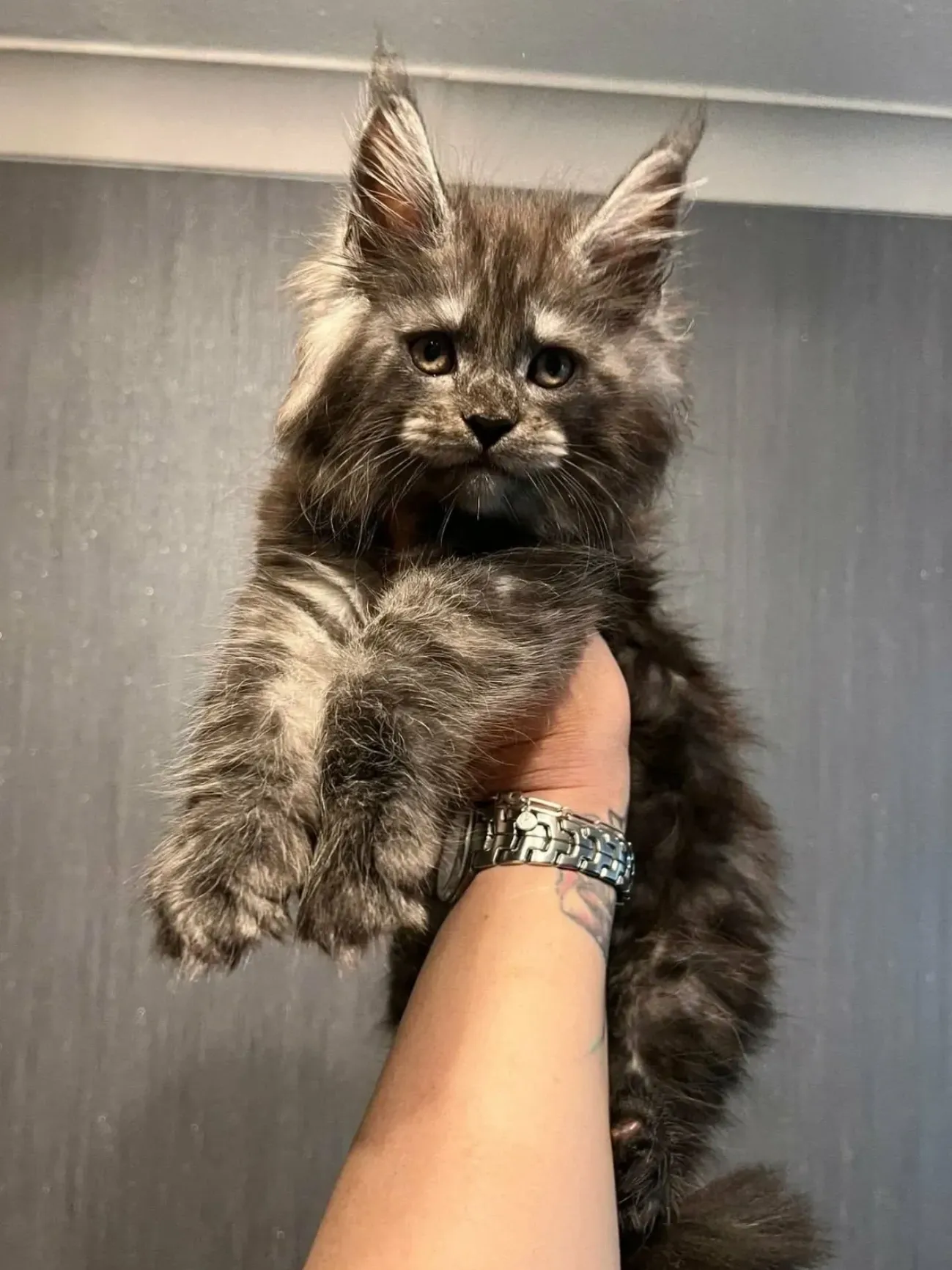
Most of what you read about bringing a pet into Singapore is written about cats, or written so generally that it skips the parts that only apply to dogs. Dogs carry three extra layers: a breed check, a licence that must exist before you can even apply to import, and housing rules that can decide whether the dog is allowed to live with you at all.
The regulatory spine is the same as for any animal — microchip, vaccinations, rabies serology where required, an import licence, and clearance at Changi. What follows is the whole path, with the dog-specific parts marked out, so you can see where your move differs from the cat guides.
Start with the breed, not the paperwork
Before anything else, confirm your dog is allowed in. Singapore bans several breeds outright, and permits others only under conditions that are genuinely onerous. We cover the full list and the conditions in Singapore's banned and restricted dog breeds, but the short version:
- Banned outright: Pit Bull types (including the American Staffordshire Terrier, Staffordshire Bull Terrier and American Bulldog), Akita, Boerboel, Dogo Argentino, Fila Brasileiro, Neapolitan Mastiff, Tosa, Perro de Presa Canario, and crosses of any of them.
- Allowed with conditions: Bull Terrier, Doberman Pinscher, Rottweiler, German Shepherd and related breeds, and Mastiffs including the Bull Mastiff, Cane Corso and Dogue de Bordeaux. These require insurance of at least $100,000, a banker's guarantee of $2,000, and the dog must be leashed and muzzled in public. Only one such dog per premises.
If your dog is a mixed breed, AVS asks for a clear colour photograph showing the head and body with the licence application, so they can confirm it isn't a prohibited type. Send that photo early. A dog that looks like a banned breed in a blurry photo creates questions you would rather answer before the flight is booked.
Then check where you will live
This step surprises people who have already signed a tenancy. Housing type limits what you may keep:
- HDB flats: one dog, and only from HDB's approved list of breeds. Specified (restricted) breeds are not permitted in HDB flats at all.
- Private property: up to three dogs and cats in total, of which only one may be a specified breed.
Work this out before you commit to a dog or a home, because neither AVS nor your landlord will bend it afterwards.
The licence order matters
For dogs, there are two separate licences and they must happen in sequence:
- The dog licence, applied for through AVS's PALS system. Since 1 September 2026 the fee structure is the same for cats and dogs: for the first three animals, S$15 a year if sterilised, or S$90 a year if not, with multi-year options. Dogs under five months are S$15.
- The import licence, which costs S$50 (or S$100 for express processing) and is valid for 90 days from issue, with no extension.
You cannot apply for the import licence until the dog licence is approved, and the approved dog licence has to be attached to the import application. Leaving the dog licence until last is one of the more common ways a timeline slips.
The health timeline
This part is identical to the cat process, and the waiting periods drive everything:
| Step | Timing |
|---|---|
| ISO microchip | First. The number must appear on every record that follows |
| Rabies vaccination | Schedule II and III countries only |
| Rabies blood test (serology) | At least 28 days after the vaccination, result 0.5 IU/ml or higher |
| Export | At least 90 days after the blood sample, and within 12 months of it |
| Core vaccinations | Distemper, adenovirus type 1 and parvovirus type 2, at least 2 weeks before export |
| Parasite treatment | Ticks/fleas and worms, both 2 to 7 days before export |
| Health certificate | Dated within 7 days of export, endorsed by the exporting country's government vet |
Your dog must also be at least 12 weeks old on the day of export.
From a Schedule I country — Australia, New Zealand, Ireland or the UK — the rabies steps fall away and the move can be measured in weeks rather than months. From Schedule II, plan four to six months. From Schedule III, add a minimum 30-day quarantine at the Animal Quarantine Centre on arrival.
Our cost calculator will map the actual dates for your country if you would rather see them than work them out.
Crates are a bigger question for dogs
Airlines apply IATA Live Animals Regulations to crate sizing: your dog must be able to stand, turn around and lie down naturally. For a large breed, that crate may be too big for certain aircraft holds, which quietly rules out some routes and airlines. It is worth establishing crate size early, because it determines both the routing and a large part of the cargo cost.
Snub-nosed breeds — Bulldogs, Pugs, Boxers and similar — face airline embargoes for welfare reasons, and those restrictions are stricter for dogs than for cats. If that is your dog, the route matters more than the price. Our notes on snub-nosed breeds cover the reasoning.
Give the dog several weeks to get comfortable in the crate at home before travel. Feed meals in it. A dog that already treats the crate as its own space travels far better than one meeting it at the airport.
Arrival at Changi
Since 1 April 2026, you cannot collect your own dog. Owners are no longer permitted to enter the Changi Airfreight Centre, and import clearance at CAPQ must be handled by an AVS-recognised pet agent. Your dog goes from the aircraft to CAPQ with the ground handler; the agent presents the documents, the officer scans the microchip and checks the dog is clinically healthy, and the dog is then released to the agent for delivery home — or transferred to the AQC if quarantine applies.
CAPQ is open Monday and Tuesday 9am to 5pm, Wednesday to Friday 9am to 8pm, closed at weekends and on public holidays, with a 1pm to 2pm closure each day. Arrivals on a Sunday or public holiday are not permitted, and a flight landing after hours means your dog waits in the ground handler's animal holding area until the next working day. Choose flights that land well inside those windows.
What it costs
A dog import generally costs more than a cat from the same country, for one simple reason: size. Cargo is priced on the volume of the crate, and a large crate can double the freight bill.
As a guide, from Europe: cargo S$2,200–3,800 for a medium dog and considerably more for a large one, crate S$180–450, origin vet and paperwork S$400–900, the rabies blood test S$120–350, AVS import licence S$50, and the dog licence from S$15. Our own handling fee starts at S$650 for clearance and delivery, or from S$2,800 for a fully managed move. GST of 9% applies to the declared value at import.
The full cost breakdown itemises all of it, and the figures are approximate — AVS fees and airline rates change.
A note on our own experience
We are Mainecoon Cattery SG, trading as Pet Agent Singapore, an AVS-recognised pet agent and AVS-licensed pet shop (AS24E00026). Cats are our specialism and our cattery is where we learned this work, but the import framework is shared, and the dog-specific layers — breed checks, PALS licensing, HDB approval, crate sizing for large breeds — are ones we handle as a matter of course.
If you are weighing up a move, send us the breed, the country and the month you are hoping to arrive. We will tell you honestly whether the dates work, and what it will cost.
Thinking about your own import?
We can carry the whole chain.
From a one-off planning call to a fully managed move, see how our packages work — or just tell us where your pet is.