Flying any cat across borders asks a lot of the animal. For brachycephalic, or snub-nosed, breeds it asks more. The same flat-faced look that makes a Persian or an Exotic Shorthair so distinctive also comes with a shortened airway, and that anatomy matters most in exactly the conditions air travel creates: stress, confinement, handling, and swings in temperature.
This post sets out what brachycephalic anatomy means for flying, how airlines tend to treat these breeds, the welfare precautions worth putting in place, and how the Singapore import framework applies regardless of breed. It is written for owners planning to bring a snub-nosed cat into Singapore, and it leans toward caution by design.
What "brachycephalic" actually means for a cat
Brachycephalic simply describes a flattened facial structure with a shortened muzzle. Among cats, the most familiar examples are the Persian and the Exotic Shorthair, with the Himalayan in the same group and the British Shorthair sitting at the milder, semi-brachycephalic end of the spectrum.
The cosmetic effect is a rounded, flat face. The functional effect is a compressed airway. Where a longer-muzzled cat has more room to move air and to shed heat through panting and respiration, a snub-nosed cat works with less. Under calm, climate-controlled conditions at home this is usually manageable. Under the stress and temperature variation of a flight, the margin narrows.
Two risks rise together for these breeds during travel:
- Breathing difficulty. A narrowed airway has less reserve when the cat is anxious, breathing hard, or warm.
- Heat stress. Cats rely heavily on respiration to regulate temperature. A compromised airway makes overheating both more likely and harder to recover from.
The breeds that look the most relaxed at home can be the most vulnerable in transit. Their anatomy gives them less room to cope when conditions change.
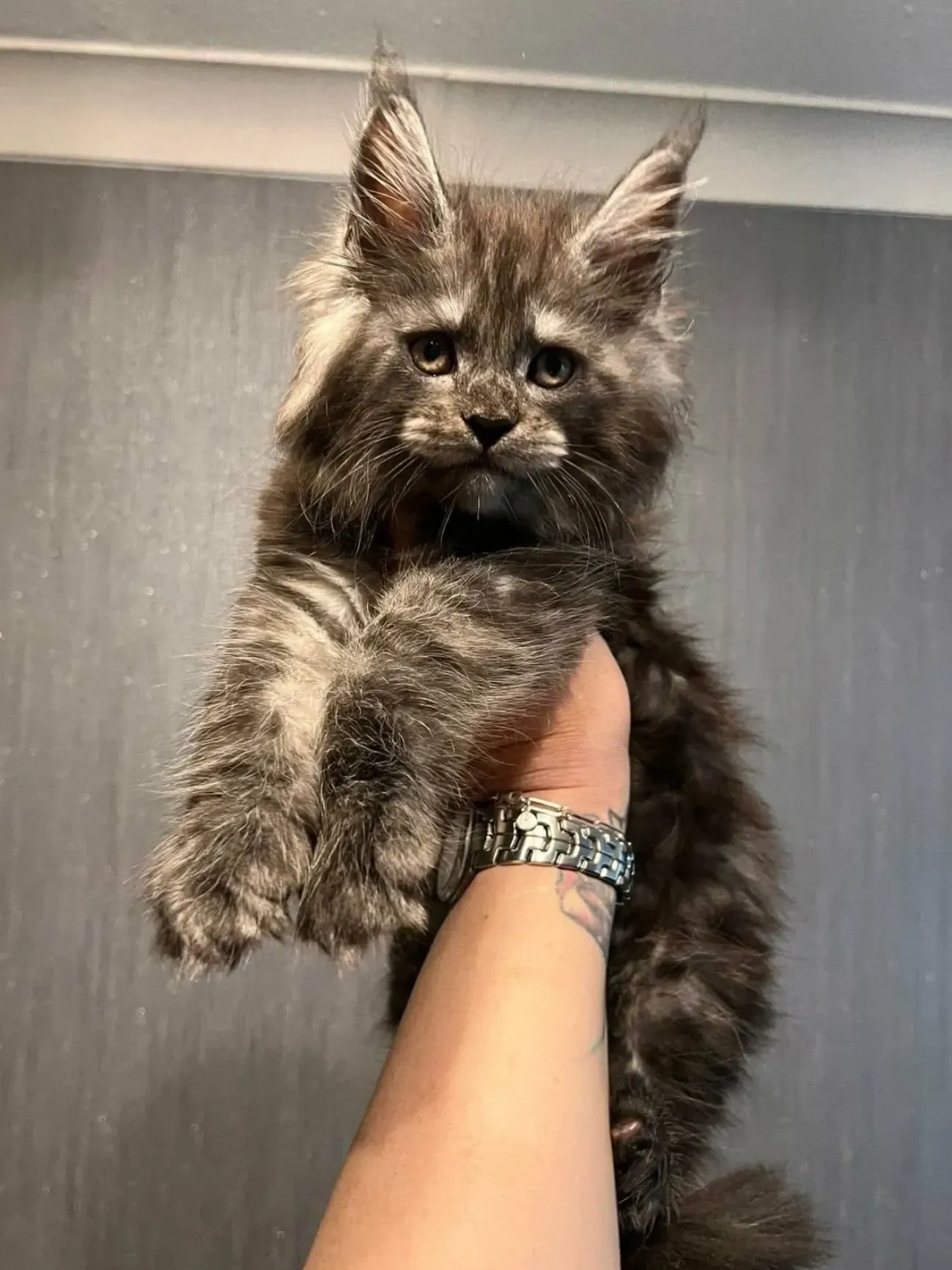
It is worth naming the contrast clearly. Not every large or impressive-looking cat carries this risk. The Maine Coon, for example, is a long-muzzled breed and is not brachycephalic, so it does not face the same breathing-related travel restrictions that a flat-faced breed does. If you are weighing breeds partly with travel in mind, that difference is real. Our sister Maine Coon cattery works with a breed that sits firmly on the non-brachycephalic side of that line.
How airlines treat snub-nosed breeds
There is no single industry rule, and that is the first thing to understand. Airline policy on brachycephalic animals varies considerably from carrier to carrier, and it changes over time. What is consistent is that many airlines treat these breeds as a special case rather than a routine booking.
In practice, you may encounter any of the following, depending on the airline:
- Extra conditions. Some carriers accept brachycephalic animals but attach additional requirements, such as a larger crate or specific paperwork confirming fitness to fly.
- Seasonal or temperature embargoes. Some carriers restrict travel for these breeds when forecast temperatures along the route exceed set limits, often during warmer months.
- Cargo restrictions. Some carriers decline to carry brachycephalic animals in cargo at all, limiting options to cabin where permitted, or refusing the breed outright.
Because of this variation, the only reliable approach is to confirm the current policy directly with the specific airline you intend to use, for the specific route and season, before you commit to anything else. Treat any general statement, including this one, as a prompt to verify rather than a guarantee.
One precaution recurs across many carriers and is worth adopting regardless: a larger, better-ventilated IATA-compliant crate. The common recommendation is to go one size up from what the cat's measurements would otherwise require. The extra space gives a snub-nosed cat more room to breathe, to change position, and to thermoregulate, and the additional ventilation helps with heat. A crate that is technically the right size for a long-muzzled cat may be too tight a margin for a flat-faced one.
Welfare precautions worth putting in place
Most of the meaningful protection for a brachycephalic cat comes from decisions made well before the day of travel. The aim is to reduce stress, control temperature, and confirm the individual cat is genuinely fit to fly.
Choose the timing and route carefully
- Fly at cooler times. Where you have a choice of departure, favour cooler parts of the day and cooler seasons. Heat is the single factor most likely to turn a manageable flight into a dangerous one for these breeds.
- Prefer direct routes. Each layover adds handling, waiting on the tarmac, and another set of temperature conditions outside your control. A direct route with minimal connections reduces all of that.
- Confirm climate-controlled holds. If the cat travels as cargo, the hold should be temperature-controlled and pressurised. Confirm this with the airline rather than assuming it.
Prepare the cat in advance
- Acclimatise to the crate. Introduce the travel crate weeks ahead, not days. A cat that already treats the crate as a familiar, safe space arrives at the airport with a lower baseline stress level, which directly helps a compromised airway.
- Plan for hydration. Ensure water is available through the crate's fittings and that the cat is well hydrated before departure. Dehydration compounds heat stress.
Get a proper veterinary assessment
- Pre-flight fitness check. A vet assessment of fitness to fly is important for any cat and more so for a brachycephalic one. The vet can judge whether this particular cat, with its particular airway, is a reasonable candidate for the planned journey, and can flag any condition that would make travel unwise.
The honest position is that for some individual snub-nosed cats, the right answer after a vet assessment may be not to fly at all, or to wait for cooler conditions. Welfare comes before the itinerary.
Risk factors and precautions at a glance
| Risk factor | Why it matters for snub-nosed cats | Precaution |
|---|---|---|
| Narrowed airway | Less reserve when stressed, warm, or breathing hard | Larger, better-ventilated crate, one size up |
| Heat and high temperatures | Compromised respiration makes overheating likely and recovery slow | Fly at cooler times and seasons; confirm climate-controlled holds |
| Stress and handling | Anxiety increases respiratory effort | Crate acclimatisation weeks in advance; direct routes |
| Multiple connections | More handling, tarmac waits, and temperature swings | Choose direct or minimal-layover routes |
| Dehydration | Worsens heat stress | Ensure hydration before and during travel |
| Underlying airway disease | Some individuals are not fit to fly | Pre-flight veterinary assessment of fitness to fly |
| Cargo-only carriage | Some airlines restrict brachycephalic breeds in cargo | Confirm current airline policy per carrier and route |
A short pre-flight checklist
- Confirm the chosen airline's current brachycephalic policy for your route and season, in writing where possible.
- Check for any temperature embargo that could affect your travel dates.
- Book a crate one size up from the standard sizing, IATA-compliant and well ventilated.
- Begin crate acclimatisation several weeks before travel.
- Schedule a veterinary fitness-to-fly assessment.
- Favour cooler flight times and direct routes.
- Confirm climate-controlled, pressurised hold conditions if travelling as cargo.
- Ensure hydration arrangements are in place.
The Singapore import framework still applies
Breed anatomy changes the welfare and airline picture, but it does not change the regulatory one. A Persian, an Exotic, a Himalayan, or any other cat enters Singapore under the same Animal and Veterinary Service (AVS) framework as any other.
The core requirements remain:
- Schedule classification. Singapore places countries into AVS Schedules I, II and III, and the requirements scale with the schedule. Confirm which schedule your country of export falls under early, because it drives the timeline.
- Microchip first, then rabies vaccination. The cat must be microchipped before the rabies vaccination, in that order, so the vaccination record is tied to an identifiable animal.
- Waiting period. A wait of at least 28 days applies after rabies vaccination.
- RNATT serology. A rabies neutralising antibody titre test must show a result of at least 0.5 IU/ml.
- Export wait for higher schedules. For Schedule II and III countries, a 90-day export waiting period applies.
- Costs and licensing. A 9 percent GST applies, and an AVS import licence is required.
There is also a recent and important change to who may clear the animal. From 1 April 2026, owners can no longer clear pets themselves at the Changi Animal and Plant Quarantine (CAPQ) facility. An AVS-recognised pet agent is required to handle that clearance. This applies to every breed, snub-nosed or not, so it should be part of your planning from the outset rather than an afterthought at arrival.
For a flat-faced breed in particular, having the clearance handled efficiently by an agent matters for welfare as well as compliance: it shortens the time the cat spends waiting and being handled at the end of an already demanding journey.
How we can help
MAINECOON CATTERY SG is an AVS-licensed pet shop (licence AS24E00026), operating as an ACRA-registered partnership. Our pet-agent recognition application with AVS is currently in progress. We are transparent about that status, and we will not describe ourselves as an AVS-recognised pet agent until that recognition is granted.
What we can do now is help you plan a brachycephalic import sensibly: thinking through timing and route, crate sizing, the documentation chain, and the AVS schedule requirements that apply to your country of export. You can read more about our services to see how we approach this.
If you are planning to bring a snub-nosed cat into Singapore and want a calm, welfare-led plan that respects the breed's extra needs, contact us and we will talk it through with you.
Thinking about your own import?
We can carry the whole chain.
From a one-off planning call to a fully managed move, see how our packages work — or just tell us where your pet is.