
Exporting from Singapore
Pet export from Singapore — we take your pet with you.
Leaving Singapore is the harder direction. Singapore asks little on the way out, but the country you are moving to sets its own tests, waiting periods and quarantine — and those rules decide your whole timeline. We handle both ends.
What we handle
Door to door, Singapore to anywhere.
An export is two regulatory systems at once. AVS governs the licence and the certificate that leaves Singapore; the destination governs everything that matters on arrival — the rabies blood test, its waiting period, the import permit and whether your pet spends its first weeks in government quarantine.
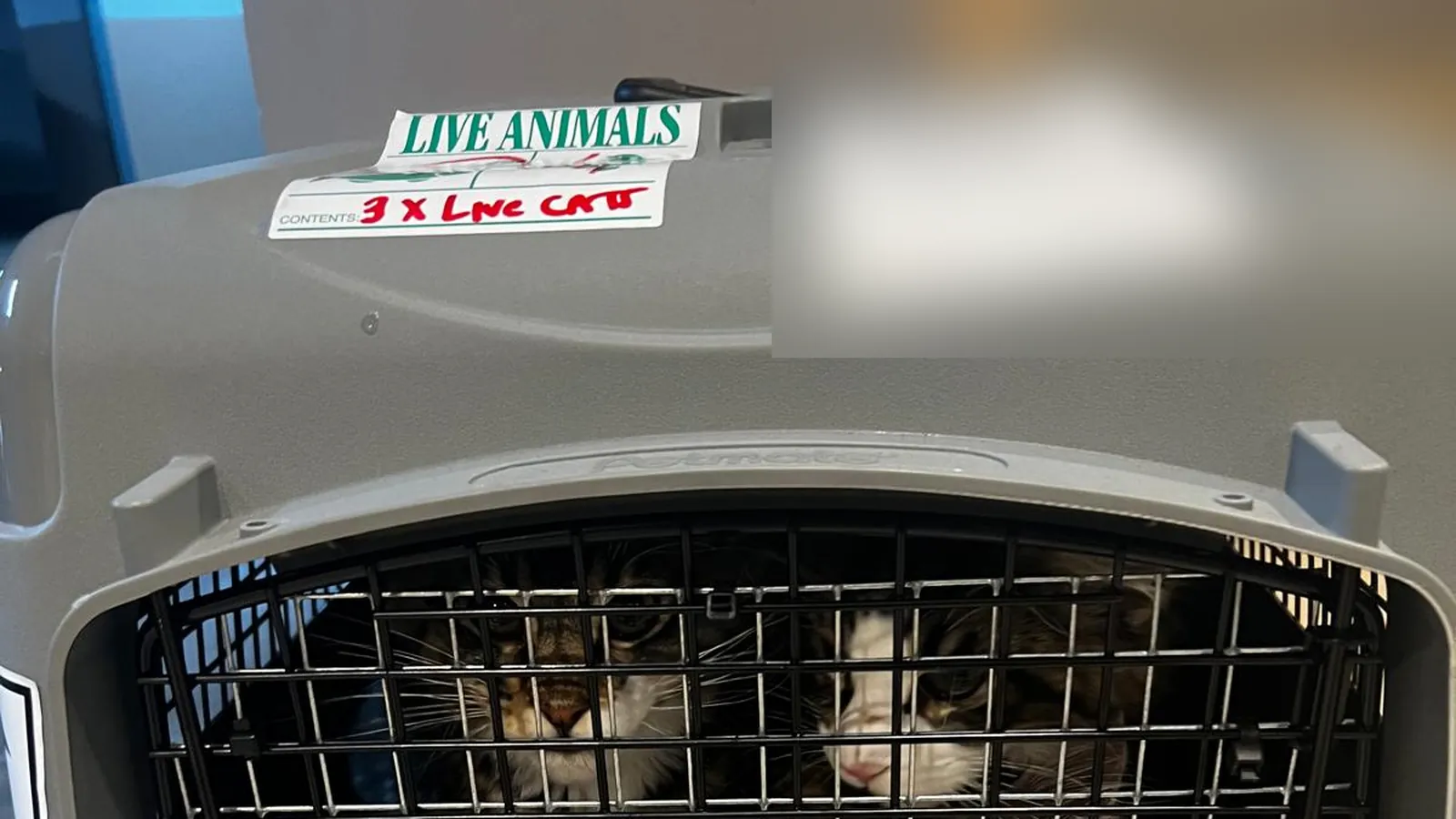
We work the destination's rules first and plan backward from the date you need to be there. That covers the AVS export licence, the vet examination and health certificate, government endorsement where it is demanded, the destination's import permit, an IATA-compliant crate, cargo booking on a route the airline will accept for your breed, and the ground handling at Changi on departure day.
Cats are our specialism — we run the Gentle Giants Maine Coon cattery — and large breeds bring their own crate and routing problems, which we have solved many times. Dogs follow the same framework with breed checks layered on top.
The process
Ten steps, and the destination sets the clock.
Verified against the AVS export requirements on 27 September 2026.
- 01You
Check the destination's rules first
Singapore imposes no veterinary conditions of its own on export — AVS's position is that exports comply with the importing country's requirements. Everything that follows is shaped by the destination: whether a rabies blood test is needed, how long you must wait after it, and whether your pet is quarantined on arrival.
Some destinations need 6–7 months of preparation. This step decides your timeline.
- 02We
Rabies titre test, if the destination is Japan
Singapore's rabies-free status is recognised by most destinations, so the blood test that dominates import timelines usually does not apply on the way out. Japan is the exception among common destinations: it does not list Singapore as a designated region, so a titre of at least 0.5 IU/ml is required, followed by a 180-day wait before arrival.
Japan's 180-day wait runs from the blood sample, not the result
- 03We
Destination import permit
Most destinations require their own permit or licence before your pet may travel — Australia's import permit, Japan's advance notification, Hong Kong's special permit, Malaysia's MAQIS permit. We apply, track and hold these for you.
- 04We
AVS export licence
The Licence to Import/Export/Transship Non-Food Animals is S$50 for normal service, issued two working days after complete documents, or S$100 express for one working day. It is valid for 90 days from issue, so it is applied for at the right point in the timeline rather than as early as possible.
Valid 90 days — applying too early is as much a problem as applying too late
- 05You
Vet examination and health certificate
A licensed private vet in Singapore examines your pet and completes the destination's certificate. The statements required, and how long the certificate stays valid, are set by the destination country.
- 06We
Government endorsement, where the destination requires it
Where a destination insists the certificate be endorsed by a government veterinarian, AVS either endorses the destination's own template manually or converts the certificate into a QR-verifiable one. Endorsement costs S$23 for normal service and S$46 express, and the manual route takes two working days with no express option.
An AVS QR-verifiable certificate is valid for only seven days from issue
- 07We
Pre-export inspection at CAPQ, where required
Some destinations mandate an inspection before departure. It is booked through NParks e-services at least five days ahead and must take place within CAPQ's operating hours. Turning up without an appointment attracts an inspection fee.
- 08We
Flight, crate and ground handling
We book cargo space on a route the airline will accept for your breed and crate size, source an IATA-compliant crate, and make the arrangements with the ground handling agent — SATS or dnata — before departure day.
- 09We
Departure day
Your pet travels with a copy of the AVS export licence, the original health certificate meeting the destination's requirements, and any other documents that country demands. We handle the handover at the airfreight terminal.
- 10You
Cancel the licence, and think about coming back
Once your pet has left, cancel its cat or dog licence in PALS — required for both cats and dogs under the 2024 licensing rules. If you may return to Singapore later, keep the rabies and vaccination records intact: a returning pet must meet Singapore's full import requirements.
Where people go
Plan-ahead times by destination.
Each summary is drawn from that country's own government requirements, checked on 27 September 2026. Rules change: we re-check them against the official source before quoting your move.
Australia
Plan 6+ monthsSingapore is a Group 2 (rabies-free) country, so no rabies titre is needed — but the clock that matters starts when AVS verifies your pet's identity to the Australian department, and export is only possible 180 days later. Dogs from Singapore also need canine influenza vaccination, which Australia requires from only two places in the world. Arrival must be into Melbourne, followed by at least 10 days at the Mickleham quarantine facility.
- Rabies titre
- Not required (Group 2)
- Quarantine
- Minimum 10 days, Mickleham
- Permit
- BICON import permit, AUD 626 first animal, 20–40 business days
United Kingdom
Plan 4–6 weeksSingapore is a listed country, so no rabies blood test and no quarantine — the fastest of the long-haul destinations. Your pet travels on a Great Britain pet health certificate issued here, at least 21 full days after its rabies vaccination. Dogs need tapeworm treatment between 24 hours and 5 days before arrival, and you must use an approved travel route.
- Rabies titre
- Not required (listed country)
- Quarantine
- None if compliant
- Permit
- No permit; GB pet health certificate
European Union
Plan 4–6 weeksSingapore is listed in Annex II, so no rabies titre is required. Your pet needs an EU animal health certificate endorsed by AVS, valid 10 days to the point of entry, plus an owner declaration, and must enter through a designated travellers' point of entry. Dogs entering Finland, Ireland, Malta, Northern Ireland or Norway also need tapeworm treatment 24 to 120 hours before arrival. Note that the EU's pet travel regulations were replaced on 1 October 2026.
- Rabies titre
- Not required (Annex II)
- Quarantine
- None if compliant
- Permit
- No permit; EU animal health certificate
Source: European Commission — bringing a pet from a non-EU country
United States
Plan 2–4 weeksThe lightest requirements of any major destination. Singapore is not on the CDC's high-risk list, so dogs need only a CDC Dog Import Form receipt, a microchip readable by a universal scanner, and to be at least six months old on arrival — no rabies vaccination or titre on this pathway. For cats, the federal agriculture department states it has no animal health requirements at all. Hawaii and Guam run their own quarantine, and individual states and airlines may ask for more.
- Rabies titre
- Not required
- Quarantine
- None federally (Hawaii and Guam differ)
- Permit
- No permit; CDC Dog Import Form for dogs
Hong Kong
Plan 3–7 weeksSingapore sits in Group II, which is exempt from quarantine provided every permit condition is met exactly — a documentation slip converts that into quarantine at your cost. You need an AFCD special permit in advance (HK$432, issued about five working days after application, valid six months for one consignment), rabies vaccination between 30 days and a year before export, and a health certificate within 14 days. Pets must travel as manifested cargo: excess baggage and hand-carry are not permitted.
- Rabies titre
- Not required (Group II)
- Quarantine
- Exempt if fully compliant
- Permit
- AFCD special permit, HK$432, ~5 working days
New Zealand
Plan 2–3 monthsSingapore is a Category 2 country, so no rabies titre — but a minimum 10 days in an approved quarantine facility applies, with entry through Auckland or Christchurch only. The permit needs at least 20 working days and a confirmed quarantine booking before you apply. The pre-export testing is the most demanding of any destination here: stacked parasite treatments and, for dogs, blood tests for Babesia gibsoni and Brucella canis, where a positive result makes the dog ineligible regardless of treatment.
- Rabies titre
- Not required (Category 2)
- Quarantine
- Minimum 10 days
- Permit
- MPI permit, minimum 20 working days
Japan
Plan 7+ monthsThe longest route out of Singapore, and the one people underestimate. Japan's designated rabies-free list has not changed since 2013 and Singapore is not on it, so the full pathway applies: two rabies vaccinations at least 30 days apart, a titre of 0.5 IU/ml or more, then a 180-day wait from the blood sample before arrival. Advance notification to the quarantine service is mandatory at least 40 days before arrival, and arriving short of the 180 days means detention for the remainder.
- Rabies titre
- Required — 0.5 IU/ml, then a 180-day wait
- Quarantine
- None if compliant; detention if not
- Permit
- No permit; mandatory notice 40+ days ahead
Source: MAFF Animal Quarantine Service
Malaysia
Plan 4–8 weeksSingapore is a scheduled country, so no rabies titre. You need an import permit from MAQIS, a health certificate from AVS covering rabies-free status and residency, and a clinical examination within 7 days of export. Restricted breeds need the Director General's written approval before the permit application, and several breeds are banned outright. Two points we always confirm with MAQIS before quoting: whether quarantine applies to your pet, and whether it may cross by road — the governing regulation refers to arrival by aircraft, while a separate official portal mentions road transport.
- Rabies titre
- Not required (scheduled country)
- Quarantine
- We confirm case by case with MAQIS
- Permit
- MAQIS import permit
Moving somewhere not listed? We export to most countries — the framework is the same, only the details change. Ask us.
What it costs
Our fee, and the fees that aren't ours.
AVS fees, at cost
- Export licence — normal
- S$50
- Export licence — express
- S$100
- Veterinary certificate — normal
- S$23
- Veterinary certificate — express
- S$46
- Transhipment licence
- S$50
Issued two working days after complete documents. Valid 90 days.
Issued one working day after complete documents.
Two working days.
One working day. Not available for physical endorsement.
For pets transiting Singapore under 24 hours. S$100 express.
The bigger variables
Air cargo dominates an export bill, and it moves with crate size, route and season — a large dog to Australia costs several times a cat to Malaysia. The rabies titre test, destination permit fees and any government quarantine are the other main lines, and quarantine in particular is charged by the destination, not by us.
Our handling fee follows the same published structure as our import work. Every third-party cost is passed through at cost and itemised before you commit.
All prices are approximate and for guidance only, not a quote. Third-party costs — air cargo, crates, vet work — move with the market, and AVS fees and requirements change from time to time (AQC daily rates rise again on 1 December 2026). We confirm every figure against the current AVS guidelines before you commit to anything.
Questions
Exporting a pet, answered.
Do I need an export licence to take my pet out of Singapore?
Yes. AVS requires an export licence for every pet leaving Singapore. It costs S$50 for normal service, issued two working days after your documents are complete, or S$100 for express at one working day, and it is valid for 90 days from issue.
How far ahead should I start planning an export?
It varies enormously. The UK, the EU and the United States are measured in weeks, because Singapore is recognised as rabies-free and no blood test is needed. Hong Kong is a few weeks more. Australia asks for at least six months, driven by a 180-day residency clock, and New Zealand needs two to three months. Japan is the longest at roughly seven months, because it does not list Singapore as a designated region. Tell us the country and we will map the dates backward.
Does my pet need a rabies blood test to leave Singapore?
Usually not. Singapore imposes no veterinary conditions of its own on export, and its rabies-free status is recognised by Australia, New Zealand, the UK, the EU, the USA, Hong Kong and Malaysia — none of which require a titre from Singapore. Japan is the common exception: it does not list Singapore as a designated region, so a titre of at least 0.5 IU/ml plus a 180-day wait applies.
Who issues the health certificate, and does AVS have to endorse it?
A licensed private veterinarian in Singapore examines your pet and completes the destination's certificate. Where that country requires a government veterinarian, AVS endorses the template manually (S$23 normal, two working days; S$46 express) or issues a QR-verifiable certificate. The QR version is valid for only seven days, so it is timed to the flight.
Can my pet fly in the cabin out of Singapore?
Not on most carriers serving Singapore. Pets generally travel as manifest cargo, which is also what the destination's customs and quarantine services expect. We book the cargo space, supply the crate and handle the paperwork.
What happens to my pet's Singapore licence?
Cancel it in PALS once the animal has permanently left. Under the Animals and Birds (Licensing and Control of Cats and Dogs) Rules 2024 this applies to cats as well as dogs.
My pet is only transiting Singapore. What is needed?
A transhipment licence, S$50 normal or S$100 express, and the transit must be under 24 hours. You will need one of: a health certificate endorsed by the exporting country's government vet, a valid rabies vaccination record, or the destination's import permit. Pets arriving by road from Malaysia must reach Tuas Checkpoint between 8am and noon.
Do you handle the destination paperwork too, or only the Singapore side?
Both. The destination's permit, its certificate wording and its arrival requirements are usually the harder half, and getting them wrong is what causes pets to be refused or quarantined. We deal with the receiving authority as well as AVS.
AVS requirements verified against the official AVS export guidance on 27 September 2026. Destination rules come from each country's own government site and change without notice — we confirm them for your dates before you commit.
Leaving Singapore?
Tell us where you're going, and when.
Send the destination country and your moving date. We'll tell you what that country requires, how far ahead to start, and what the whole move costs.