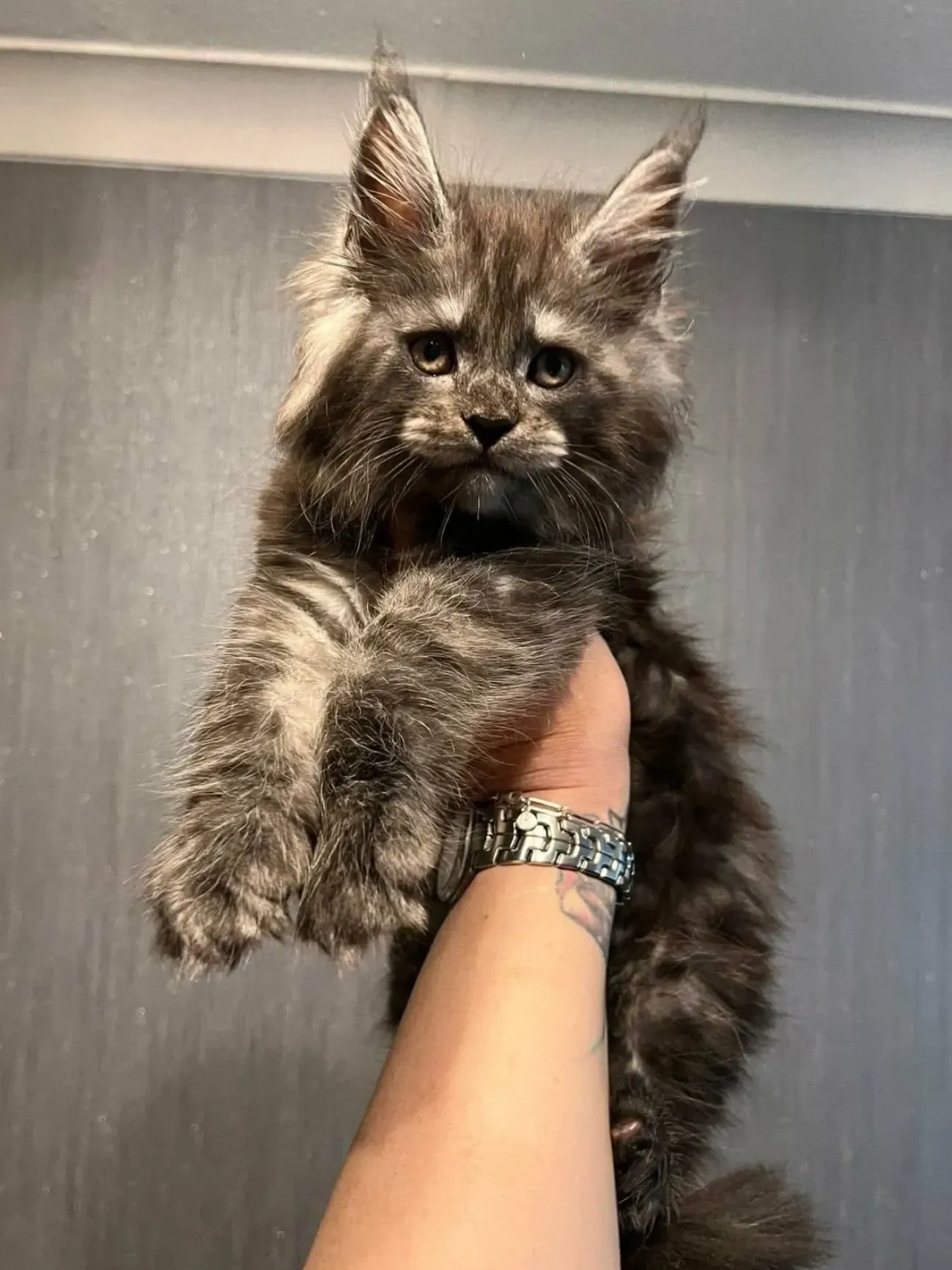
When people hear the word quarantine, they usually picture a kennel run at a government facility, a fixed number of weeks, and a daily bill. That picture is accurate for some imports, but not all of them. A portion of pets arriving in Singapore complete their quarantine at home, under conditions set by the Animal and Veterinary Service (AVS).
This post explains what home quarantine actually is, what tends to trigger it, how the 10 days are meant to work, and how to set up a space that passes inspection. The aim is to remove the guesswork before your pet is already on a plane.
Two quarantine paths
There are two broad quarantine arrangements for pets entering Singapore, and they are not interchangeable. Which one applies depends on where the animal is coming from and on the animal's own history.
The first is quarantine at the Animal Quarantine Centre (AQC). This is the route associated with higher-risk imports, broadly Schedule III. It runs for a minimum of 30 days, and the cost is roughly S$29 per day plus boarding charges. The pet stays at the facility for the whole period, and you visit under the centre's rules.
The second is home quarantine. This is a 10-day in-home isolation that can apply to certain Schedule II imports. Instead of boarding at a facility, the pet is confined at your declared residential address, and an AVS inspection closes out the period.
The table below sets out the contrast at a glance.
| Feature | AQC quarantine | Home quarantine |
|---|---|---|
| Typical category | Schedule III | Certain Schedule II imports |
| Location | Animal Quarantine Centre | Your declared home address |
| Minimum duration | 30 days | 10 days |
| Indicative cost | S$16.80–26.25/day plus S$75 transport | No daily facility fee (preparation costs apply) |
| How it ends | Release from the centre | AVS inspection at home |
A point worth stressing up front: home quarantine is not a discount option you choose. It is an outcome determined by your pet's category and circumstances. You cannot opt out of AQC quarantine by asking for home quarantine instead, and you should not assume home quarantine until the AVS conditions on your specific import confirm it.
What tends to trigger home quarantine
Home quarantine usually comes into play when an otherwise eligible Schedule II import carries a particular wrinkle in its history. The triggers below are the common ones. Treat them as the typical reasons rather than an exhaustive legal list, and confirm your own situation against the current AVS conditions issued for your import.
The two triggers we see most often are:
- A long separation between owner and pet. Where the owner and the animal have been apart for an extended stretch, commonly framed as a separation of more than five days, home quarantine may be required even though the underlying paperwork is in order.
- Short ownership period. Where the pet has been under the owner's ownership for less than six months at the time of import, home quarantine can apply.
The logic in both cases is the same. The animal is eligible to enter on the Schedule II health requirements, but its recent history adds a layer of caution, and a short period of monitored isolation addresses that.
If neither trigger applies to your pet, you may not face home quarantine at all. If one does, it is far better to know before departure so you can prepare the space rather than scramble after arrival.
The background gates still apply
Home quarantine sits on top of the standard Schedule II requirements. It does not replace them. Before quarantine is even a question, your pet needs to clear the usual import gates, and these have a strict order and timeline.
In sequence, the core requirements are:
- ISO microchip first. The pet must be microchipped with an ISO-standard chip before the rabies vaccination, so the vaccination is tied to an identifiable animal.
- Rabies vaccination, then a wait. After vaccination there is a minimum 28-day wait before the next step counts.
- Rabies serology (RNATT). A blood titre test must show a result of at least 0.5 IU/ml.
- The 90-day wait. There is a 90-day waiting period before export, measured from the qualifying blood sample.
On top of the animal's health profile, there are administrative elements: an AVS import licence is required, and 9% GST applies on import. These do not change because quarantine happens at home rather than at a facility.
There is also a change that affects how clearance is handled. From 1 April 2026, owners cannot clear their pets at the Changi Animal and Plant Quarantine (CAPQ) station themselves. An AVS-recognised pet agent is required to handle that clearance. This matters for home quarantine cases too, because the clearance step is part of the same arrival process that leads into the isolation period.
If any of these dates or thresholds are unclear for your situation, check them against the current AVS conditions before booking flights. The order of steps is unforgiving, and a vaccination given before a microchip, for example, can reset the entire timeline.
How the 10 days work
Once your pet arrives and is cleared, the home quarantine clock starts. The principle is simple: the pet stays isolated indoors at the address you declared, for the full period, until AVS inspects and ends it.
A few features define the period.
The pet must remain at the declared address. Home quarantine is tied to a specific home, not to you as a person. You cannot move the pet between residences during the 10 days, and you cannot quarantine at a different address from the one on the import paperwork.
The isolation is genuine isolation. The pet should be kept indoors and away from other animals, and the home itself must be suitable and secure. The point of the period is to monitor the animal in a contained setting, so the containment has to be real.
The inspection ends the period. Home quarantine does not simply expire on the tenth day. An AVS inspection of the home and the animal closes it out. Until that inspection happens and is satisfied, the quarantine is not formally complete.
Because the inspection is the closing step, it is worth arranging it in good time rather than leaving it to the last moment. A home that is not ready, or an inspection that cannot be scheduled promptly, extends the practical length of the period even if the 10 days have technically passed.
Preparing your home
A compliant space is mostly about containment, hygiene, and being inspection-ready. None of it is exotic, but it does need to be done before the pet arrives, not improvised afterwards. Use the checklist below as a starting point and adjust it to the conditions AVS issues for your import.
- Choose one room or zone. Pick an indoor area that can be closed off and kept separate from other pets in the household for the full period.
- Make it secure. Check that doors, windows, and any gaps are escape-proof. A frightened animal in a new country will test boundaries.
- Separate from other animals. If you have resident pets, plan how they will be kept apart from the new arrival across the whole 10 days, including feeding and toileting.
- Set up the essentials. Food, water, bedding, and a litter tray or toileting area should all be inside the isolation zone so the pet does not need to leave it.
- Keep it clean and easy to clean. Surfaces that wipe down, and a simple cleaning routine, make both daily care and the closing inspection easier.
- Match the declared address. Confirm the space is at the exact address on your import documents.
- Plan the inspection. Know how and when the closing AVS inspection will be arranged, so the period can actually be ended on time.
If you keep more than one animal, the separation requirement is the part most people underestimate. Think through the logistics early, because retrofitting a divided household around a new arrival is harder than it sounds.
Where we fit in
We are MAINECOON CATTERY SG, an AVS-licensed pet shop (licence AS24E00026), registered as an ACRA partnership under UEN 53447114E. We handle pet import and relocation work into Singapore, and home quarantine cases are part of that. Our AVS pet-agent recognition application is in progress; until it is granted, we do not describe ourselves as an AVS-recognised pet agent.
For home quarantine specifically, we offer a home quarantine setup add-on at S$280. It covers preparing a compliant isolation space and arranging the closing inspection, so the period runs cleanly rather than dragging because the home was not ready. You can see how this sits alongside our import work on our services page.
If you are also weighing which breed or where to source one, our sister Maine Coon cattery at Mainecoon.sg covers that side separately.
A note on confirming the details
The thresholds and triggers in this post reflect how home quarantine generally works, but every import is assessed on its own facts, and AVS conditions can change. Treat this as orientation, not a final ruling on your case. Always confirm the requirements, dates, and quarantine arrangement that apply to your specific pet against the current AVS conditions before you commit to travel.
Getting this right early is the difference between a calm 10 days and a stressful arrival. If you would like help working out whether home quarantine applies to your pet and how to prepare for it, contact us and we will walk you through it.
Thinking about your own import?
We can carry the whole chain.
From a one-off planning call to a fully managed move, see how our packages work — or just tell us where your pet is.