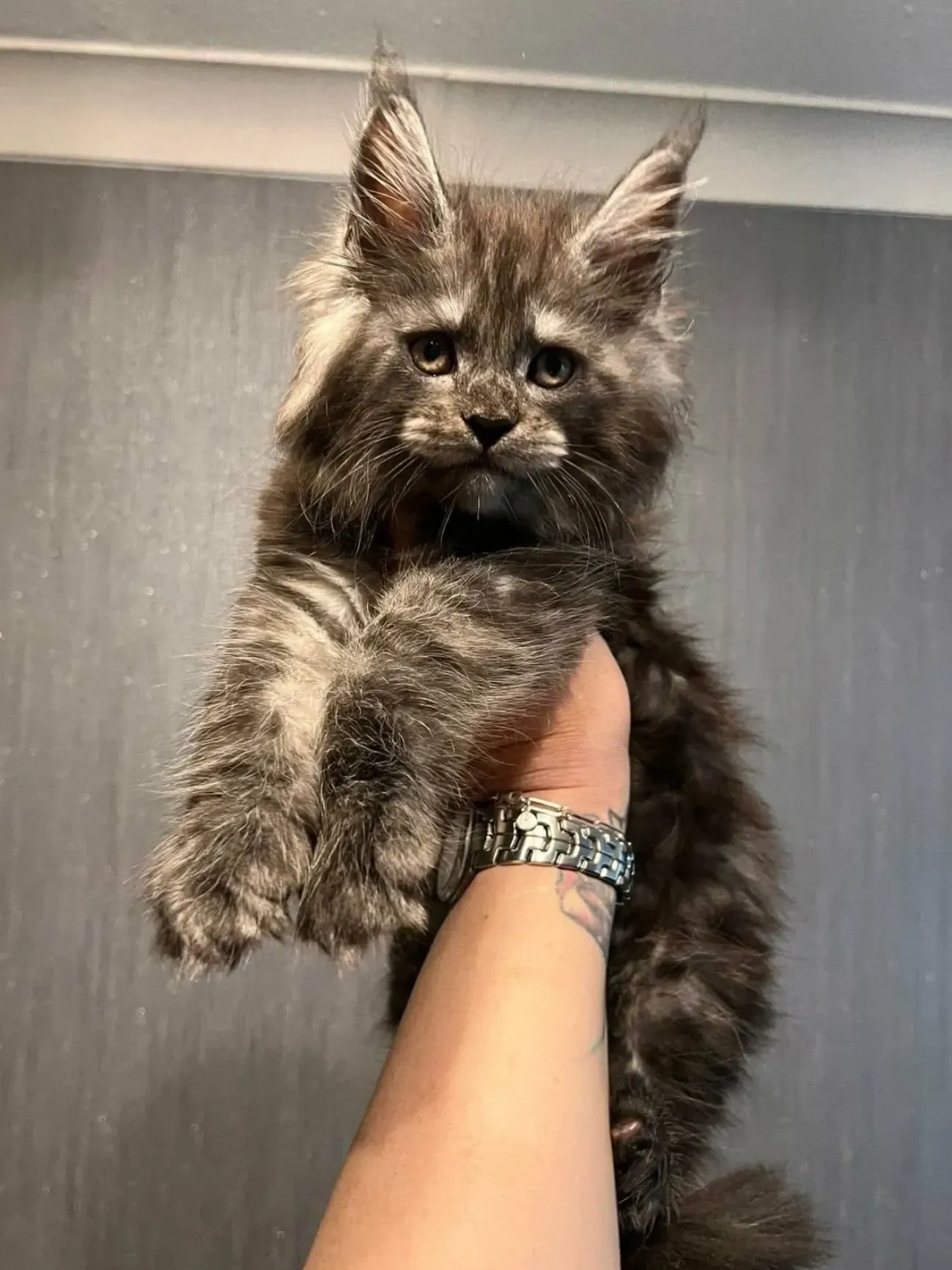
When you start planning a move to Singapore with a cat or dog, the first question is not really about crates or flights. It is about one word: schedule. Since July 2024, Singapore's Animal and Veterinary Service (AVS) has sorted every country of origin into one of three schedules based on rabies risk. The schedule your pet is travelling from decides almost everything that follows: which tests are required, how long the timeline runs, and whether your pet spends time in quarantine after arrival.
This post walks through what Schedule I, II and III actually mean, what they share, and how to work out which one applies to you.
Why Singapore uses a schedule system
Singapore is a rabies-free country and is determined to stay that way. Rather than treat every imported animal the same, AVS calibrates its requirements to the rabies risk of the place the animal is coming from. A pet flying in from a long-standing rabies-free island faces a lighter process than one arriving from a region where rabies still circulates.
The result is a tiered system. The lower the risk of the origin country, the fewer hoops, the shorter the wait, and the less likely your pet will need to sit in quarantine. The higher the risk, the more verification AVS wants before the animal joins the local population.
It is worth saying plainly: the schedules are about the country, not about your individual pet. A perfectly healthy, fully vaccinated dog still follows the high-risk pathway if it is flying out of a high-risk country. The temperament of the animal, the breed, and the owner's own travel history do not change the classification. What matters is the rabies risk profile of the place the animal departs from, and that is set by AVS, not negotiated case by case.
This is also why two friends moving to Singapore in the same month can face very different processes. One leaving New Zealand and one leaving a high-risk country will follow completely separate timelines and budgets, even if their pets are otherwise identical.
The gates every schedule shares
Before we split into the three pathways, it helps to understand the requirements that apply across the board. Whichever schedule you fall under, these common gates show up.
Microchip first. Your pet needs an ISO 11784/11785 compliant microchip, and the timing matters. The microchip must be implanted and recorded before the rabies vaccination. If the order is reversed, the vaccination record cannot be tied cleanly to the animal, and AVS may not accept it.
Rabies vaccination. With the microchip already in place, the rabies vaccination is administered and logged against that chip number.
Serology, where required. For schedules that need it, a rabies neutralising antibody titre test (RNATT) confirms the vaccine worked. The blood draw must happen at least 28 days after vaccination, and the result must come back at 0.5 IU/ml or higher to pass.
The 90-day wait. For Schedule II and III, there is a 90-day waiting period that runs before your pet can be exported to Singapore. This is one of the biggest reasons to start early.
Licence, crate, and tax. An AVS import licence is required regardless of schedule. The travel crate must meet IATA standards. And 9% GST applies on the declared import value of the pet.
A good rule of thumb: the microchip and vaccination order, the 28-day serology wait, and the 90-day pre-export wait are where most timelines quietly slip. Map these dates backwards from your intended arrival before you book anything.
Schedule I: rabies-free countries
Schedule I covers countries that Singapore recognises as rabies-free. The current list includes the United Kingdom, Ireland, Australia and New Zealand.
This is the simplest path. When the conditions are met, pets from Schedule I countries do not require rabies serology and do not require quarantine on arrival. You still need the microchip, the import licence, an IATA-compliant crate, and to account for GST, but the heavy items, the titre test and the quarantine stay, fall away.
For owners relocating from these countries, the planning burden is mostly administrative rather than time-bound. There is no 90-day serology clock to wait out in the same way, which makes Schedule I the fastest route into Singapore.
Schedule II: controlled-risk countries
Schedule II covers controlled-risk countries. This group includes most of Europe, the United States, Canada, Japan and Hong Kong.
Here the requirements step up. Pets need their rabies vaccination and a passing rabies serology result (RNATT at 0.5 IU/ml or higher). The serology introduces the 28-day wait after vaccination before the blood draw, and the 90-day pre-export wait before the animal can travel.
The important relief is at the other end. Schedule II pets do not require a stay at the Animal Quarantine Centre. Home quarantine may apply instead, meaning your pet completes any required observation period at your residence rather than in a government facility. That difference, no AQC stay, is the practical line that separates Schedule II from Schedule III.
For most owners moving from North America, Europe or Japan, this is the schedule that applies. The process is more involved than Schedule I, but the absence of a mandatory facility quarantine keeps both the cost and the stress down.
Schedule III: high-risk countries
Schedule III is the catch-all for high-risk countries: every country not named in Schedule I or II falls here.
This is the most demanding pathway. Pets require rabies serology, and on arrival they must complete a minimum 30-day stay at the Animal Quarantine Centre (AQC). The AQC stay is not optional and cannot be served at home.
The AQC stay also carries a direct cost. AVS charges S$16.80 per day for a non-air-conditioned kennel or S$26.25 for an air-conditioned one, plus S$75 transport, so a minimum 30-day stay adds a meaningful line item to the total relocation budget on top of flights, crate, licence and GST.
If you are coming from a Schedule III country, space at the AQC needs to be arranged, and the 30-day minimum has to be built into your arrival planning. Because the centre has finite capacity, early coordination matters even more than it does for the other schedules.
The three schedules side by side
The table below summarises the practical differences. Use it as a quick orientation, then confirm the current requirements for your specific country, since AVS can and does update its lists.
| Schedule I | Schedule II | Schedule III | |
|---|---|---|---|
| Risk level | Rabies-free | Controlled risk | High risk |
| Rabies serology (RNATT) | Not required | Required (≥0.5 IU/ml) | Required (≥0.5 IU/ml) |
| Quarantine | None | Home quarantine may apply; no AQC stay | Minimum 30-day AQC stay |
| 90-day pre-export wait | No | Yes | Yes |
| Typical countries | UK, Ireland, Australia, New Zealand | Most of Europe, USA, Canada, Japan, Hong Kong | All other countries |
| Approx. quarantine cost | None | None (facility) | S$16.80–26.25/day at the AQC, plus S$75 transport |
How to find your schedule
Start with the country your pet is physically departing from, not your nationality or where you used to live. Check whether that country appears on the Schedule I or Schedule II lists. If it appears on neither, it falls into Schedule III by default.
A few situations deserve extra care:
- Recent moves between countries. If your pet lived in a higher-risk country before moving to a lower-risk one, AVS may look at the residency history, not just the departure airport. Confirm how the time-in-country rules apply to your case.
- Layovers and transit. A technical stopover is generally different from an extended stay, but routing can still raise questions. Plan the flight path with the schedule in mind.
- List updates. The schedules are reviewed over time. A country's classification can change, so verify against the current AVS lists rather than an older summary.
Building your timeline
Once you know your schedule, work backwards from your intended arrival date.
For Schedule I, the limiting factors are mostly the import licence and the logistics of the flight and crate. For Schedule II and III, the binding constraint is usually the serology-plus-90-day sequence: microchip, then vaccination, then wait at least 28 days, then draw blood for the titre test, then a passing result, then the 90-day wait before export. That chain alone can run to several months, which is why early starts matter.
Schedule III owners should add the 30-day AQC stay on top of all of that, plus the lead time to secure a place at the centre.
If any one of these steps is done out of order, for example vaccinating before the microchip is recorded, the clock can reset. The cost of a reset is rarely money. It is weeks.
One important change from 1 April 2026
There is a procedural change worth flagging for everyone, regardless of schedule. From 1 April 2026, owners can no longer enter the Changi Animal and Plant Quarantine (CAPQ) facility themselves. Only an AVS-recognised pet agent can clear pets there.
In practice this means that the final-mile clearance, the part where your pet is collected, processed and released, has to be handled by a recognised agent rather than by you in person. It is a meaningful shift, and it is something to confirm well before your pet's flight.
Where we fit in
We are MAINECOON CATTERY SG, an AVS-licensed pet shop (AS24E00026), and we help owners navigate exactly this process, from working out the right schedule to mapping the test-and-wait timeline and preparing import paperwork. Our application for AVS pet-agent recognition is in progress, and we are happy to be transparent about that status as it develops.
If you want to understand the wider picture of moving a cat or dog into Singapore, take a look at our import services for how we structure the process step by step. For those curious about the cattery side of what we do, our sister Maine Coon cattery lives over at Mainecoon SG.
The schedule system can feel intimidating at first, but once you know which of the three pathways applies to you, the rest becomes a matter of sequencing and patience. The pets that travel smoothly are almost always the ones whose owners started early and respected the order of operations.
If you are not sure which schedule your country falls under, or you want help sketching a realistic timeline, contact us and we will walk you through it.
Thinking about your own import?
We can carry the whole chain.
From a one-off planning call to a fully managed move, see how our packages work — or just tell us where your pet is.