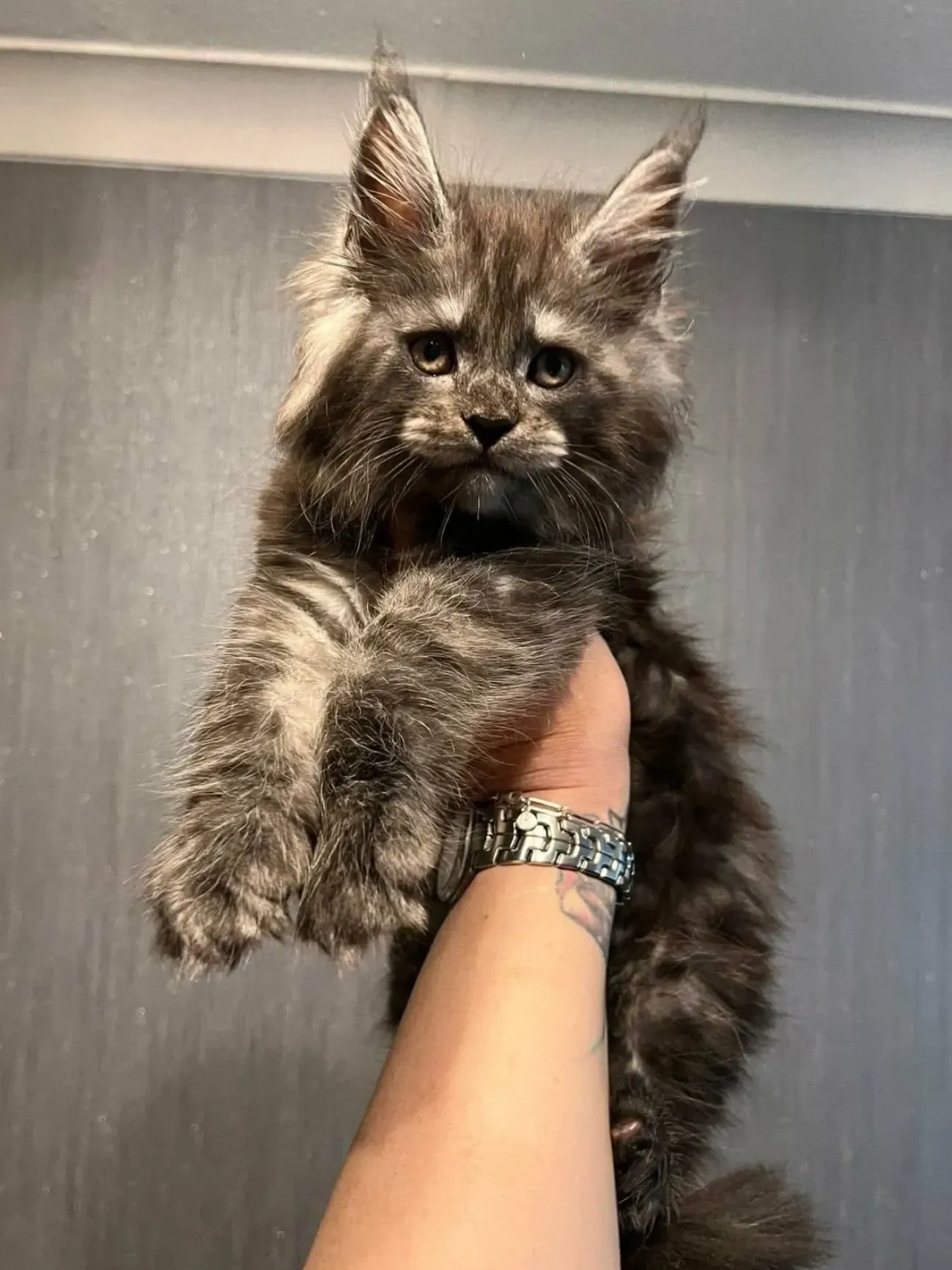
The honest answer to "how much does it cost to import a cat to Singapore" is that it depends, and anyone who quotes you a single tidy figure is either guessing or hiding something. The total is built from several independent line items, each set by a different party — an airline, a crate manufacturer, Singapore Customs, the Animal and Veterinary Service (AVS), an origin-country vet, and possibly a quarantine facility. None of those parties coordinate their pricing, and several of them charge by weight, by schedule, or by the day.
This article walks through every cost we are aware of, gives the typical range for each, and shows a worked example for the most common case we see: a cat coming from Europe under Schedule II. We pass third-party costs through to you at cost, with no markup. Our own handling fees are listed separately and clearly, so you can always tell what is a real-world expense and what is the fee for us doing the work.
The two cost layers
It helps to separate the spend into two layers from the start.
The first layer is third-party costs. These are amounts paid to other organisations — the airline, the crate maker, the government, the origin vet, and quarantine if it applies. We do not add anything to these. Whatever the airline invoices is what you pay.
The second layer is service and handling fees. These are what we charge to manage the process: planning the timeline, preparing and checking documents, coordinating vet appointments, lodging applications, and clearing the cat on arrival. You can see the structure of these in our service packages. The reason to be precise about this split is that it is the only way to keep a quote transparent. A blended "all-in" number makes it impossible for you to see whether you are paying a fair handling fee or subsidising an inflated cargo cost.
Which schedule applies to your cat
Before any numbers make sense, you need to know which AVS import category your origin country falls into, because it changes both the cost and the timeline.
Schedule II covers most of Europe, the United States, and similar countries. These cats need a rabies serology (blood titre) test and a waiting period after that test, which is why the realistic planning horizon is around six to seven months from start to flight. Schedule II cats generally do not require post-arrival quarantine if everything is completed correctly and on time.
Schedule III covers countries with a higher assessed rabies risk. In addition to the testing, these cats must serve a stay at the Animal Quarantine Centre (AQC) on arrival — a minimum of 30 days. That adds a meaningful, per-day cost that Schedule II imports avoid.
Most cats we help bring in are Schedule II from Europe, so that is the case we cost out in detail below. If your cat is Schedule III, add the quarantine line items described later.
Third-party costs, line by line
Here is the full set of external costs, with typical ranges and notes on what drives them up or down.
| Line item | Typical range | What it depends on / notes |
|---|---|---|
| Air cargo (Europe to Singapore) | S$2,200 – 3,800 | Crate size and weight, airline, route, and season. Larger breeds in bigger crates sit at the top of the range. |
| IATA-approved travel crate | S$180 – 450 | Priced by weight class. A larger, sturdier crate for a big cat costs more. |
| GST on import value | 9% of declared value | Charged by Singapore Customs on the declared value of the animal. A higher declared value means more GST. |
| AVS licence fees | S$50 – 200 | Schedule-dependent government fees for the import licence and related permits. |
| Origin vet and paperwork | S$400 – 900 | Varies considerably by country. Covers health certification, vaccinations, microchip checks, and the export documentation. |
| AQC quarantine (Schedule III only) | S$16.80–26.25/day, min. 30 days | Applies only to Schedule III imports. S$16.80/day non-air-conditioned or S$26.25/day air-conditioned, plus S$75 transport to the AQC. |
A few things are worth underlining about that table.
The air cargo figure is almost always the single largest third-party cost, and it is the one that moves the most. It is driven by the dimensions and weight of the crate, which in turn depend on the size of your cat. A large Maine Coon needs a bigger crate than a small domestic shorthair, and that difference flows straight through to the freight bill. Airline choice, the specific route, and the time of year also matter.
The crate cost is linked to the same weight class logic. It is not a place to economise — the crate must be IATA-approved, correctly sized, and secure, or the airline will not accept the booking. Buying the right crate once is cheaper than a refused booking and a rebooked flight.
GST is a genuine variable that catches people out. It is nine percent of the declared import value of the cat, so a higher-value pedigree animal carries a higher GST charge than a rescue or a more modestly valued cat. This is a Customs charge, not ours, and we declare honestly.
The origin vet range is wide because veterinary pricing and the exact documentation requirements differ from country to country. The serology test, the health certificate, vaccinations, and the export paperwork all sit inside this line.
Service and handling fees
Our own fees are separate from everything above. We offer a small number of clearly defined tiers so you can pick the level of involvement you need.
| Service tier | Fee | Best for |
|---|---|---|
| Consultation | S$180 | Understanding your timeline, schedule category, and likely total before committing. |
| CAPQ Clearance | from S$650 | Owners flying their own pet in who want professional clearance handling. |
| Full relocation | from S$2,800 | Overseas purchases and full moves, managed end to end. |
On top of those, several add-ons are available depending on your situation:
- Home quarantine setup: +S$280
- AQC quarantine handling (Schedule III): +S$420
- Multi-pet discount: -15% on the second animal onward
- Vet visit coordination: +S$150
- Document-only support: from S$320
- Boarding while in transit: from S$45/night
The consultation fee is the one we recommend most people start with. For S$180 you get a realistic picture of which schedule applies, what your timeline looks like, and a costed range for your specific case — which is far more useful than a generic number from a website.
An important regulatory change from 1 April 2026
There is a change worth budgeting around. From 1 April 2026, owners can no longer clear their own pets at the Changi Animal and Plant Quarantine (CAPQ) facility. From that date, clearance must be handled by an AVS-recognised pet agent.
In practical terms, this means the CAPQ Clearance handling fee stops being optional for arrivals on or after that date — it becomes a required part of the process rather than a convenience you could skip by doing it yourself. If you are planning an import that lands around or after that cutoff, factor the clearance handling into your budget from the outset.
On our own status: MAINECOON CATTERY SG is an AVS-licensed pet shop (licence AS24E00026), operating as an ACRA-registered partnership (UEN 53447114E). Our pet-agent recognition application is in progress. We are being upfront that this recognition is pending rather than already granted, and we will only describe ourselves as a recognised pet agent once that is confirmed.
A worked example: Schedule II cat from Europe
Let us put real ranges together for the most common case we handle — a cat imported from a European country under Schedule II, with an owner who wants us to handle clearance on arrival. Because nearly every line is a range, the sensible output is also a range, not a single number. Anyone presenting one exact figure for this is not being straight with you.
Third-party costs for this example:
- Air cargo: S$2,200 – 3,800
- IATA crate: S$180 – 450
- Origin vet and paperwork: S$400 – 900
- AVS licence fees: S$50 – 200
- GST: 9% of declared value (varies entirely with how the cat is valued)
Adding the four fixed-ish third-party lines gives roughly S$2,830 at the low end and S$5,350 at the high end, before GST. GST then sits on top, scaling with the declared value of the cat. For a modestly valued cat the GST might be a small addition; for a high-value pedigree it can be substantial, so we deliberately leave it as a percentage rather than fold a fake figure into the total.
Now add our handling. For an owner flying their cat in and wanting professional clearance, CAPQ Clearance starts at S$650. If you also want vet visit coordination, add S$150.
So a representative all-in range for this Schedule II European import looks like:
- Lower end: around S$3,500 (third-party costs near the bottom of each range, plus CAPQ Clearance, plus a small GST amount on a modestly valued cat).
- Higher end: around S$6,000 and up (third-party costs near the top, larger crate and freight for a big cat, CAPQ Clearance, vet coordination, plus a larger GST amount on a high-value animal).
We want to be clear that the upper figure can rise further if the declared value is high, if the cat is large enough to need premium freight, or if origin-country vet costs are at the steep end. Equally, the lower figure assumes a smooth, well-planned process with no rebookings. The honest takeaway is that most straightforward Schedule II European cat imports land somewhere in the mid-three-thousands to low-six-thousands in Singapore dollars, with GST as the main swing factor.
For a Schedule III cat, take that range and add the AQC quarantine cost — S$16.80 to S$26.25 per day (non-air-conditioned or air-conditioned) for a minimum of 30 days, plus S$75 transport — and our AQC quarantine handling add-on of S$420. The 30-day minimum stay alone is a meaningful additional sum, which is the main reason Schedule III imports cost more than Schedule II.
Ways the cost moves up or down
A few levers genuinely affect your total, and a few myths do not.
What actually changes the number:
- Cat size. A larger cat needs a larger crate and heavier freight. This is the biggest controllable variable in the cargo line.
- Declared value. GST scales with it, so a higher-value animal costs more to bring in.
- Schedule. Schedule III adds at least 30 days of quarantine cost that Schedule II avoids.
- Number of pets. From the second animal onward, our 15% multi-pet discount reduces the per-animal handling fee.
- How much you want us to do. Document-only support from S$320 is the lightest touch; full relocation from S$2,800 is the most hands-off for you.
What does not save real money:
- Skipping the crate spec to buy a cheaper box. A non-compliant crate gets the booking refused, which costs more in the end.
- Trying to clear the cat yourself after 1 April 2026. That route is closing, and the clearance handling becomes a required line rather than an avoidable one.
- Underdeclaring value to reduce GST. We do not do this, and it is not worth the risk.
Planning your budget realistically
If you are at the very start, build your budget in this order. First, confirm your schedule, because it sets the timeline and whether quarantine applies. Second, get a freight estimate based on your cat's likely crate size, since that is the largest moving cost. Third, add the smaller fixed third-party lines — crate, AVS fees, origin vet. Fourth, estimate GST from a realistic declared value. Finally, add the handling tier that matches how involved you want to be.
That sequence gives you a defensible range rather than a hopeful guess. It also makes it obvious where the spend concentrates, which is almost always freight and, for higher-value cats, GST.
If you are bringing in a pedigree cat specifically, you may also find it useful to look at our sister Maine Coon cattery for context on the breed and what a healthy, well-documented cat looks like before it ships. Knowing the animal well in advance helps you plan crate size and value declaration accurately, which feeds straight back into the budget.
A transparent quote beats a tidy number
The reason this article runs through ranges rather than one headline figure is that a single number would be misleading. Your cost depends on your cat, your country, your schedule, and how much of the work you want to hand over. What we can promise is that third-party costs are passed through at cost with no markup, and our handling fees are fixed and published.
If you would like a costed range built around your actual situation — your origin country, your cat's size, and your timeline — contact us for a quote. We would rather give you an honest range than an impressive-looking number you cannot trust.
Thinking about your own import?
We can carry the whole chain.
From a one-off planning call to a fully managed move, see how our packages work — or just tell us where your pet is.