
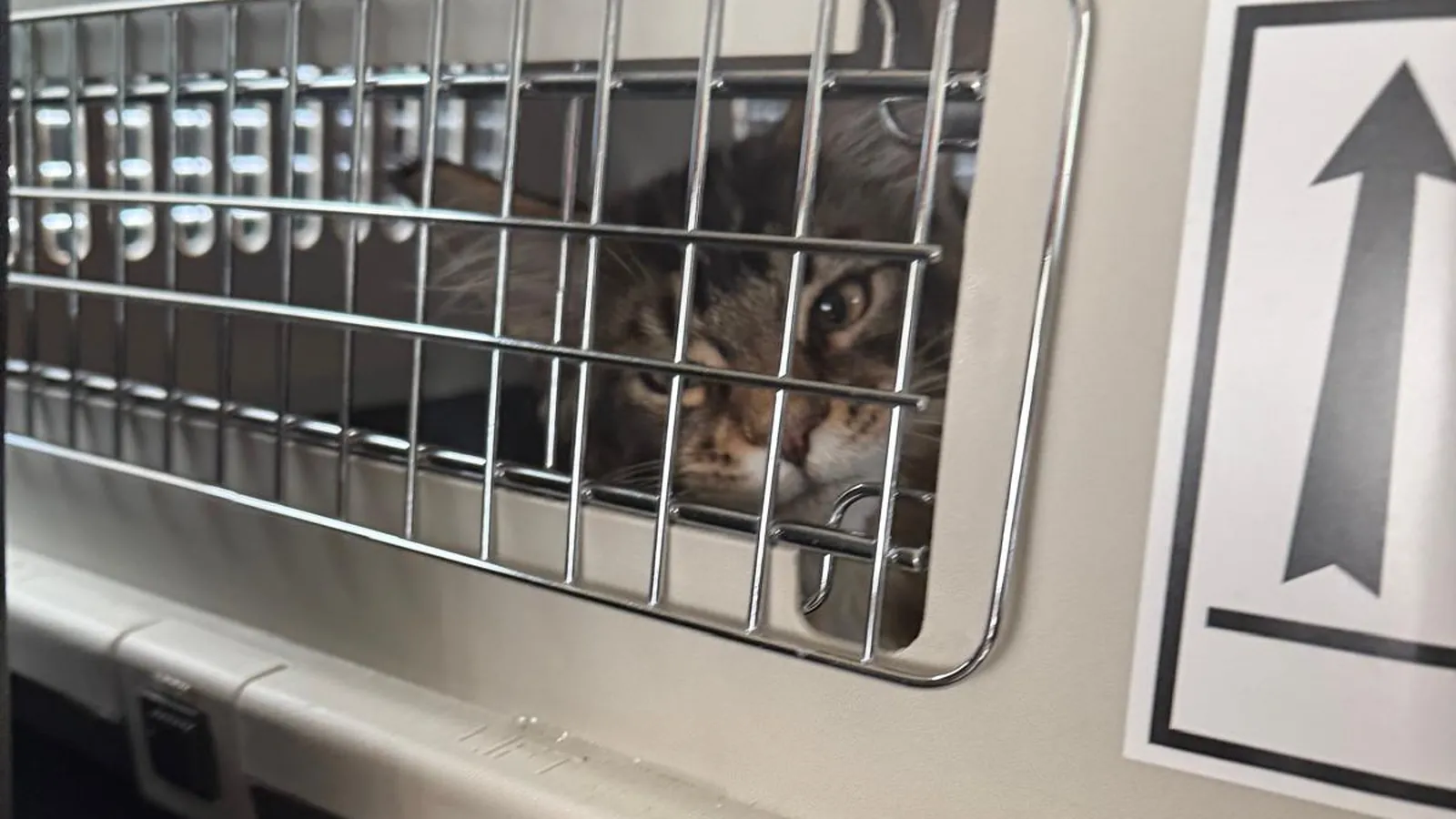
The single biggest thing you can do to make a pet comfortable on a flight is to make the crate familiar well before you travel. A cat or dog that already sleeps and eats in its crate arrives calmer, copes better with noise and handling, and recovers faster. Everything else in this guide is a supporting detail, from feeding to what you tuck inside.
One framing point first. Most pets do not travel next to you. On most airlines, including Singapore Airlines, pets fly as checked baggage or manifest cargo in a temperature-controlled hold, and only recognised assistance dogs ride in the cabin. That is why preparation is mostly about the crate, the timing and the paperwork. For airline specifics see our guide to Singapore Airlines and pets.
This is general welfare guidance, not veterinary advice. Your own vet knows your pet, and your airline's rules take priority over anything here.
Weeks
How far ahead crate training should start, not days
None
Sedatives allowed by Singapore Airlines for pets in its hold
32kg
Pet plus crate: above this SIA moves your pet to cargo
Start with the crate, weeks ahead
Airlines require a rigid, ventilated crate built to the IATA Live Animals Regulations, and your pet has to be able to stand, turn around and lie down naturally in it. SIA sizes it from your pet's nose-to-tail-base length plus half its elbow height, twice its shoulder width, and its full standing height. Our airline guide has the aircraft-specific heights, which vary from aircraft to aircraft.
Crate training countdown
6 weeks out
Put the crate in the living room
Leave it open, door off or tied back, with a worn T-shirt or blanket inside. Let your pet investigate in their own time and drop treats in without closing anything.
4 weeks out
Meals in the crate
Feed in the crate, so it predicts good things. Add the door and close it for seconds, then minutes, while you stay in view.
2 weeks out
Longer stays and movement
Build to an hour or two with the door shut. Lift the crate and carry it gently, and put it in the car, so motion is not new on the day.
Final week
Rehearse the real thing
Use the actual travel crate, with the actual bedding. Check the door fasteners, the ventilation and the label. Do not change anything now.
If your pet is a snub-nosed breed, plan the route as carefully as the crate. Our notes on flat-faced breeds explain why a bigger, better-ventilated crate and a cooler route matter.
Food and water
There is no universal rule, because airlines and vets differ, but these habits are widely used:
- Give the usual food, not a new brand, in the days before travel. Changes upset stomachs at exactly the wrong moment.
- A lighter meal a few hours before check-in, rather than a full one, is common advice. Confirm the timing with your vet.
- Make sure the water dish is fixed in the crate where it can be refilled from outside, and that your pet is well hydrated before leaving home.
- Pack a small bag of the same food with the paperwork, in case the journey runs long.
Be aware that ground handlers may not feed or walk pets. SIA says pets held after CAPQ closes in the SATS area are kept in an air-conditioned space with water, but are not fed or walked. Take that into account when you choose a flight.
Sedation: please talk to your vet, and expect a no
It is tempting to want your pet knocked out for the flight. The advice from airlines and most vets points the other way. Singapore Airlines is explicit that sedatives and tranquillisers are not permitted, and many vets caution that sedated animals can struggle with balance and temperature regulation. If your pet is very anxious, ask your vet about behavioural preparation, calming routines and a trial run, rather than medication on the day.
What goes in the crate, and what stays out
In the crate
- Absorbent bedding that smells like home, such as a worn T-shirt. SIA asks for no straw
- A fixed water dish that can be refilled from outside
- A label with your name, address and phone number
- A flat collar only, with no leash or muzzle inside the crate
Leave out loose toys with small parts, anything that can be chewed and swallowed, and blankets that could block ventilation. Do not use all-mesh containers: airlines list them as not accepted.
Cats and dogs need slightly different things
Cats usually do best with a crate that feels like a den: a cover over part of it for privacy (never blocking ventilation), and a familiar blanket. Many cats hate being seen. Practise with the crate on a table or in the car, since they dislike surprises more than confinement.
Dogs often need more exercise beforehand and a clear association between the crate and a reward. For large breeds, check crate size early, because it decides which aircraft and airline can carry them. Our guide to importing a dog covers this, and our cat guide does the same for cats.
The paperwork packet
The documents travel with the animal. Into Singapore, an AVS-recognised pet agent presents your pet's papers at the Changi Airfreight Centre, and since 1 April 2026 owners cannot do it themselves. Out of Singapore, you carry a copy of the AVS export licence, the original health certificate and any destination documents. Our guide to pet travel documents lists them, and our timeline guide shows when each one must be dated.
Flight-day routine
- 1Light exercise, a calm morning
- 2Last toilet break before the crate
- 3Crate secured, label checked
- 4Check-in, early
- 5Collect and settle on arrival
- Exercise gently in the morning so your pet is tired, not wound up.
- Arrive early. SIA asks you to check in two hours before most flights, three from the United States.
- Stay calm. Pets read your mood. A quick, cheerful goodbye is kinder than a long one.
- Choose daylight, cool arrivals. Pick a flight that lands inside CAPQ hours (Monday and Tuesday 9am to 5pm, Wednesday to Friday 9am to 8pm, closed weekends and public holidays) so your pet is not held overnight.
Arrival day
Expect your pet to be tired, thirsty and a little odd for the first day. Offer small amounts of water and a modest meal, in a quiet, enclosed room with the crate left open as a retreat. For an import, the agent clears your pet at CAPQ and delivers it home, or transfers it to the Animal Quarantine Centre if the schedule requires. Our home quarantine guide explains the Schedule II conditions.
Watch for panting that does not settle, vomiting, or a pet that will not drink after 24 hours, and call a vet if any appear.
Mistakes we see most often
- Buying the crate the week before. Pets need time to accept it, and the crate must still meet the airline's rules for the aircraft on your route.
- Choosing a crate for looks. Soft carriers and all-mesh boxes are refused for hold travel. Rigid, ventilated and leakproof is the rule.
- Booking a flight that lands after hours. A pet that arrives outside CAPQ hours waits in the handler's holding area until the next working day.
- Changing food or routine at the last minute. Familiar is calming.
- Leaving paperwork dates until the end. Health certificates and licences have short validity windows, so work backwards from the flight.
Sources and further reading
- IATA: travelling with pets
- Singapore Airlines: pets, checked 27 September 2026
- AVS: exporting a dog or cat, checked November 2026
Let us handle the hard parts
We are Mainecoon Cattery SG, trading as Pet Agent Singapore, an AVS-recognised pet agent. We book the cargo space, supply an IATA-compliant crate and clear your pet at CAPQ, which leaves you free to do the crate training. See our services, the import process or request a quote. For a price estimate, use the cost calculator.
Thinking about your own import?
We can carry the whole chain.
From a one-off planning call to a fully managed move, see how our packages work — or just tell us where your pet is.